AI Advances in Mathematics Spark Hope Despite Job Concerns
Recent AI breakthroughs in math, while impressive, still lag behind human experts. Experts debate AI's long-term impact on mathematical innovation and careers.
A recent meeting of leading mathematicians at OpenAI's headquarters has fueled concerns about the future of their profession in the face of advancing artificial intelligence. While some attendees expressed pessimism about job security and the relevance of human mathematicians, a contrary view suggests that AI's current capabilities do not pose an imminent threat to the field.
According to experts, AI models, despite their impressive achievements, remain significantly less capable than experienced academic mathematicians. Recent announcements from AI developers highlight AI's growing role in mathematical research. OpenAI reported that its frontier AI model disproved the unit distance conjecture, a longstanding problem in discrete geometry, in May. Anthropic followed in July with two AI-derived results in academic cryptanalysis. Most recently, OpenAI published ten new mathematical results from its latest model, while Anthropic released Claude's attempt to address the century-old Riemann hypothesis.
These breakthroughs demonstrate AI's potential in mathematics, yet they also underscore its limitations. AI advancements generally fall into two categories: generating counterexamples to previously unproven mathematical statements or applying known techniques to existing problems in novel ways. For instance, AI identified a counterexample to the Jacobian conjecture, a task that required extensive computational search combined with a form of learned intuition. In the case of the unit distance conjecture, AI introduced concepts from algebraic number theory, a field that might not have been the first choice for human mathematicians tackling the problem.
Experts note that these AI-driven discoveries are relatively low-hanging fruit, as they do not require the development of new theoretical frameworks. However, the ability to identify unexpected connections between different areas of mathematics remains a form of creativity comparable to achievements in other domains, such as mastering the game of Go or advancing protein folding research.
A significant gap remains between AI's current capabilities and the ability to generate substantial new conceptual frameworks essential for solving complex mathematical problems. While AI systems excel at searching and recombining existing ideas, they struggle to develop deep, sustained new theories. This limitation reflects a broader challenge in AI: the ability to recombine existing knowledge in novel ways without achieving true conceptual novelty.
The rapid pace of AI development suggests that these limitations may not persist indefinitely. Mathematical breakthroughs achieved by AI were not explicitly designed but emerged as properties of increasingly capable models. Predicting the timeline for AI to achieve novel mathematical creativity remains speculative, but experts suggest it could happen sooner rather than later.
As AI continues to evolve, its role in mathematics is likely to expand, but human mathematicians are not yet obsolete. The field remains a blend of creativity, intuition, and deep theoretical understanding—qualities that current AI systems have yet to fully replicate.
Comments (0)
No comments yet — be the first to weigh in.

Energy biz SSE smacked around in court by a guy and AI
An Oxford doctoral student has defeated British energy provider SSE Energy Supply in court after utilizing artificial intelligence models to build his legal def...
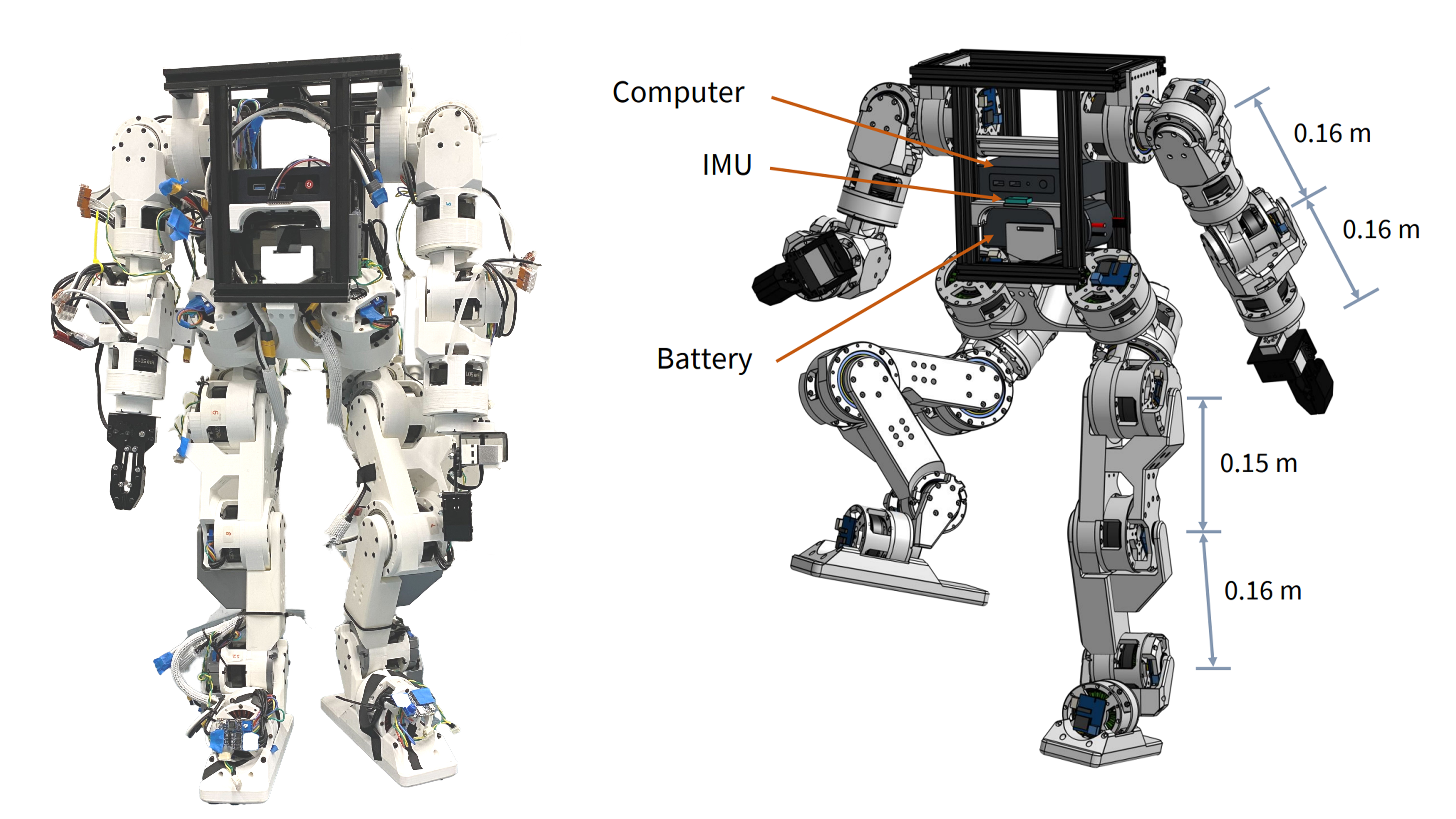
Berkeley Humanoid Lite: Affordable Open-Source Robot with DIY Actuators
Explore the Berkeley Humanoid Lite, a budget-friendly open-source robot featuring 3D-printed actuators under $5,000 USD. Learn how its modular design benefits DIY projects.

Woodstove Safety Monitor: Oru System Alerts Users to Temperature Fluctuations
Discover how the Oru woodstove assistant helps prevent dangerous chimney fires by monitoring exhaust gas temperatures and alerting users to temperature changes.
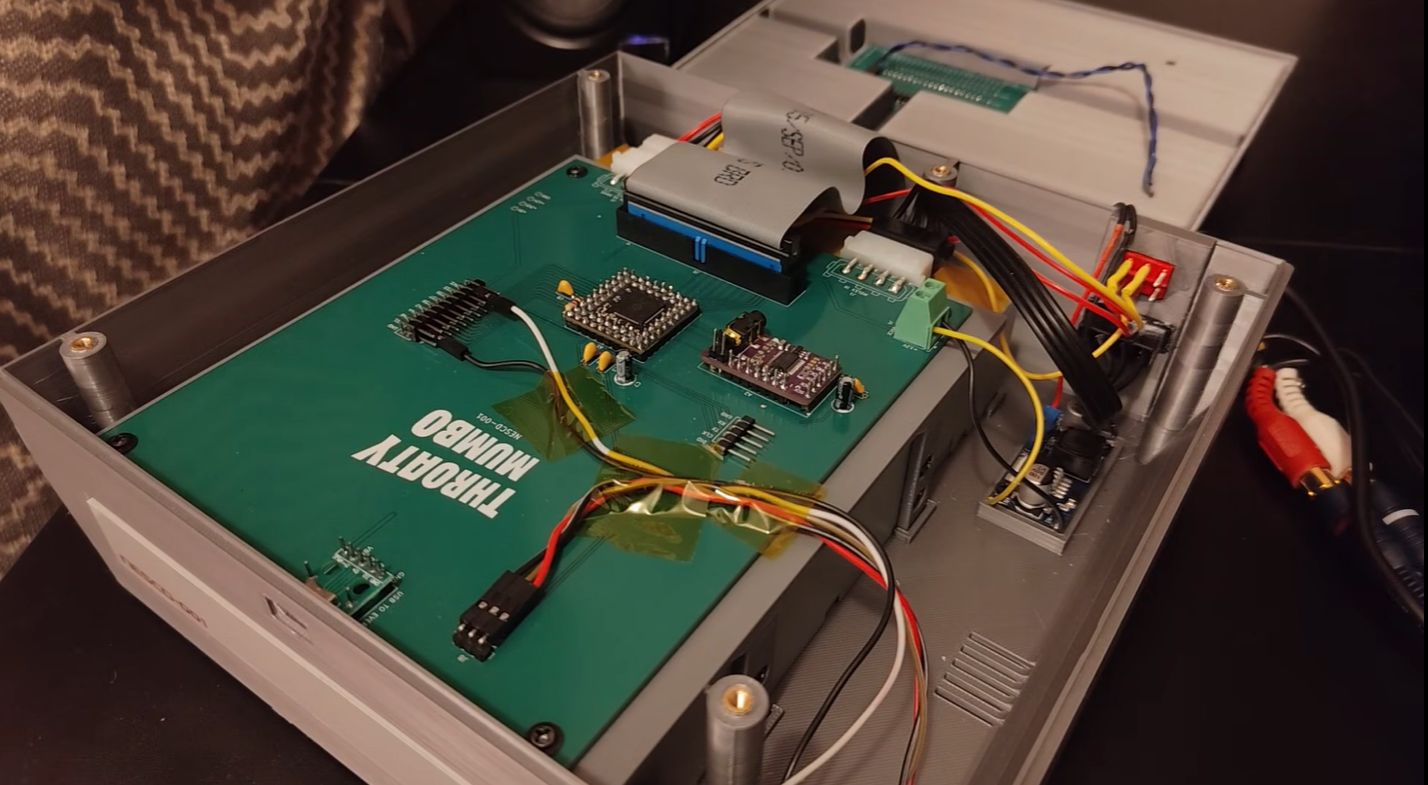
NES CD Add-On Revives 1980s Gaming with Optical Storage
Explore how a DIY project integrates a CD drive with the NES using an RP2350B microcontroller and Everdrive N8 Pro for expanded storage and audio playback.

Mumbai’s Vile Parle Cypher is giving unheard rappers a voice

Enrich and Ultimo impress

Karnataka CM Signals Review of 5% Park Land Amendment Bill in Assembly

