China Vows to Defend Trade with Iran as US Threatens Sanctions, Escalating Tensions
China condemns US threats of sanctions over Iran trade, pledging to safeguard its interests. Analysts warn of global economic risks as tensions rise amid US efforts to isolate Tehran.
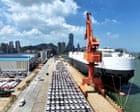
China has sharply rebuffed a United States warning that it could impose secondary sanctions on any country that continues to trade with Iran. Beijing said the threat would be illegal under international law and that it would take “all necessary measures” to protect its national interests. The statement follows a Monday announcement by U.S. Treasury Secretary Scott Bessent, who unveiled a package of sanctions targeting 60 individuals, entities and vessels for alleged involvement in trade with Tehran. No Chinese financial institutions appear on the list, a move that reflects Washington’s caution about disrupting the global financial system.
China is a major buyer of Iranian oil, purchasing an estimated 80 % of the country’s exports, and has repeatedly defied earlier U.S. efforts to curtail revenue flows to the Tehran regime. The Treasury’s latest sanctions package does not include the Chinese banks that finance Iranian oil shipments, though it does threaten to remove any entity that facilitates money laundering on Iran’s behalf from the U.S. dollar system. The omission has raised questions about how far the Trump administration will go in confronting China’s financial system as it seeks to isolate Iran.
In a statement to reporters, Chinese Foreign Ministry spokesperson Lin Jian said that cooperation between China and Iran has always been conducted within the framework of international law and must not be interfered with. “China firmly opposes illegal unilateral sanctions,” he added. “We will take all necessary measures to safeguard our rights and interests.” Beijing’s warning comes ahead of a scheduled summit next month between President Donald Trump and President Xi Jinping, where the two leaders are expected to discuss a range of issues including Iran.
Iran’s response was swift. Economy Minister Ali Madanizadeh told state television that the country’s defense posture had shifted from defensive to offensive, urging adversaries to “wait for an attack.” The same day, an oil tanker was struck by an unidentified projectile at the mouth of the Strait of Hormuz. The United Kingdom Maritime Trade Operations Centre reported that the crew was safe and that there was no immediate environmental damage. Only two commercial vessels successfully transited the narrow waterway on Monday.
In the same week, Iran and Oman held talks aimed at agreeing on joint management of the strait. Oman’s foreign minister, Badr al‑Busaidi, expressed hope that a temporary route would soon be announced. A Pakistani delegation, headed by Army Chief Field Marshal Asim Munir, also visited Tehran to discuss reopening the strait. The Pakistani military said the talks focused on that objective, following a U.S.–Iran memorandum signed in June that had intended to open the waterway pending further negotiations, but the deal collapsed within weeks.
Oil prices fell about 4 % to a one‑week low after the U.S. sanctions announcement, as traders reassessed the risk of economic pressure versus military escalation. The price per barrel remained around $87, well above the pre‑war average. U.S. Defense Secretary Pete Hegseth said that further military action was not off the table, noting that kinetic strikes in or near the Strait of Hormuz could still be considered.
Bessent described the sanctions campaign as unprecedented, likening it to the D‑Day landings as a turning point. He said the U.S. had identified those who continue to deal with Iran and would give each violator a deadline to cut ties or face sanctions. The U.S. also announced that it would call on world leaders to cease interactions with Tehran, though it did not specify whether President Trump would speak to President Xi.
Experts say Washington is now relying on intensified economic strangulation after six months of limited military and diplomatic gains. The United Arab Emirates, a close U.S. and Israeli ally, announced it was suspending trade ties with Iran in response to the new sanctions. Turkey, another trading partner with Iran, has yet to comment. While the sanctions may be effective, analysts warn that they are unlikely to bring about a quick settlement favorable to the United States.
Comments (0)
No comments yet — be the first to weigh in.
Iran-US Tensions Escalate Amid Hormuz Strait Crisis – Live Updates
Iranian President Pezeshkian seeks diplomatic solutions with global leaders at SCO summit in Kyrgyzstan amid rising US tensions over Hormuz Strait.

Search continues for 18 passengers after ferry capsized in northern Cyprus
Search and rescue operations are continuing off the coast of Kyrenia in northern Cyprus after a passenger ferry capsized and sank on Sunday, leaving at least ei...

Swiss Man Arrested After Deadly Rave Shooting Kills Italian Woman
A 43-year-old Swiss suspect has been arrested after a shooting at a techno rave in Aarau left one woman dead and several others injured. Authorities continue their investigation.

England attack's 2005 comparisons fair - Trescothick
England’s new pace attack is drawing comparisons to the legendary Ashes-winning quartet of 2005, according to interim head coach Marcus Trescothick. The current...

Mumbai’s Vile Parle Cypher is giving unheard rappers a voice

Enrich and Ultimo impress

Karnataka CM Signals Review of 5% Park Land Amendment Bill in Assembly

