Communicating Research Uncertainty: Why Honesty Builds Public Trust
Researchers across disciplines discuss challenges in conveying uncertainty and why transparency fosters trust, despite the difficulty of simplifying complex science for public audiences.

Researchers from diverse fields gathered this summer for a three-day workshop organized by CIFAR to address a common challenge: effectively communicating uncertainty in research. The interdisciplinary group included a cosmologist, an emergency management scholar, a genetic counselor, a hydrologist, a neuropsychologist, a health risk communication expert, a cognitive neuroscientist, a theater director, an investigative journalist, a meteorologist, a sociologist, a human rights scholar, an Indigenous community health expert, and a microbial geneticist.
Each participant brought an object representing their struggle to convey uncertainty clearly—such as a weather monitor, a blank flip chart, or a gachapon toy—highlighting that uncertainty is a universal issue across disciplines. Rather than treating uncertainty as a failing, the group concluded that it is an inherent part of research and should be openly acknowledged rather than concealed. They emphasized that uncertainty is not a lack of knowledge but a space for curiosity and new understanding.
The challenge, they noted, lies in sharing this uncertainty with the public. Many researchers feel pressure to present findings as more certain than they are, fearing that admitting doubt could erode trust. However, glossing over uncertainty can backfire when discrepancies later emerge, damaging credibility. The group stressed that uncertainty is not a problem to be solved but an ongoing aspect of research that must be managed transparently.
Uncertainty manifests in different ways across fields. For example, weather forecasters simplify complex atmospheric data into predictions, knowing experts may still disagree. Wildfire scientists cannot predict exact fire behavior but can confidently state that fires will occur, underscoring the need for mitigation strategies despite uncertainty. Genetic counselors translate population-level health risks into personal decision-making tools, while statisticians acknowledge that "significant" results depend on social conventions like p-value thresholds.
The group also highlighted how public perception of research is shaped by intermediaries—journalists, social media, or trusted messengers. People interpret information based on their experiences and beliefs, meaning the same data can lead to vastly different conclusions. For instance, someone with a positive healthcare experience may view vaccine side effect reports as reassuring, while someone who has faced discrimination may see them as evidence of hidden risks.
The workshop concluded that honesty about uncertainty generally maintains or strengthens trust, whereas vagueness or manipulation erodes it. However, they warned that manufactured uncertainty can reinforce political or corporate narratives, as seen in the tobacco industry’s tactics to delay regulation by casting doubt on research.
As a takeaway, the researchers suggested several questions for evaluating research coverage: Does the communication acknowledge uncertainty? Is it tailored to the audience? Does it reflect the evolving nature of science? The goal, they agreed, is not to eliminate uncertainty but to convey it in a way that fosters understanding and trust.
Comments (0)
No comments yet — be the first to weigh in.

NASA Launches Nancy Grace Roman Telescope to Unlock Universe's Mysteries
NASA's new Nancy Grace Roman Space Telescope lifts off from Florida to study dark energy, exoplanets, and cosmic mysteries with unprecedented precision and scope.

Nature reserves spot rare species during heatwaves
Nature reserves in Hertfordshire and Middlesex have documented rare species this summer, with volunteers spotting wildlife not seen in decades and some even for...

Inmates at HMP La Moye craft boxes to save Jersey's hedgehogs
Prisoners at HMP La Moye have crafted nesting and feeding boxes to support Jersey's hedgehog population, boosting rehabilitation and community engagement.
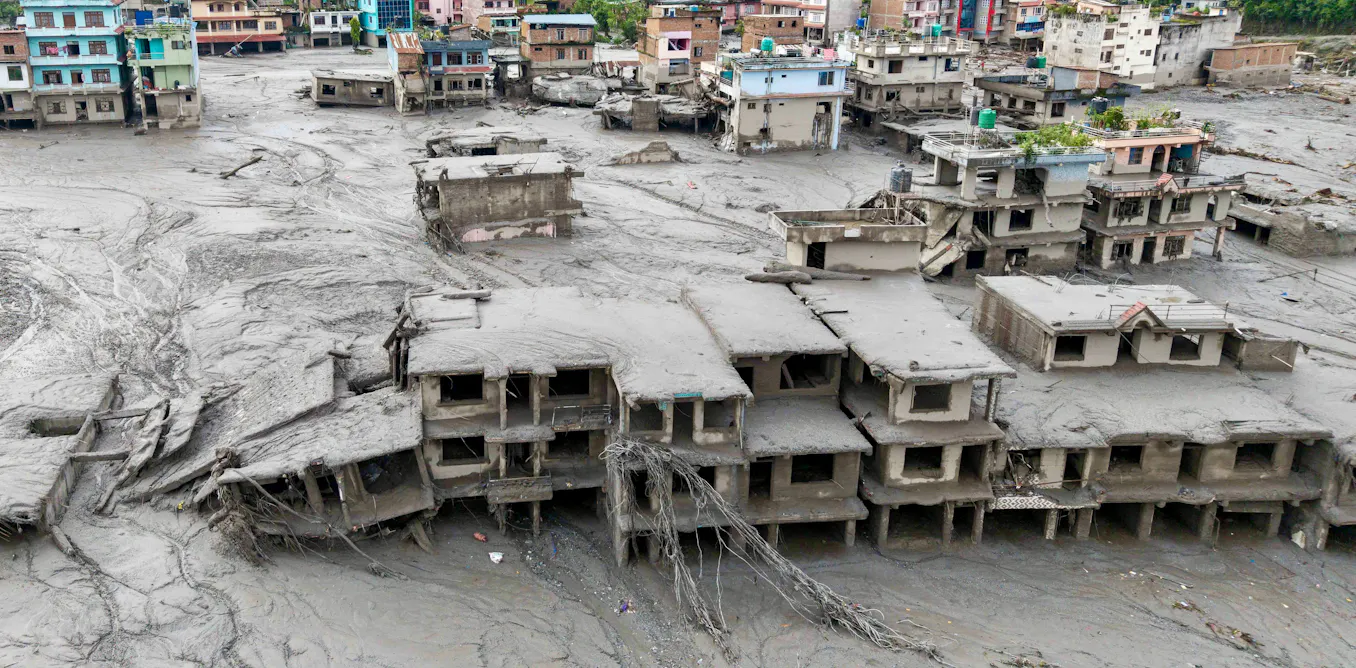
2026 Nepal Flood: Ice‑Rock Avalanche, Glacial Lake Outburst and Climate‑Change Risks
A massive ice‑rock avalanche triggered a catastrophic flood in Nepal on Aug. 26 2026, followed by a glacial lake outburst that devastated towns and hydropower plants. Climate‑change‑driven thawing increased the risk.

Mumbai’s Vile Parle Cypher is giving unheard rappers a voice

Enrich and Ultimo impress

Karnataka CM Signals Review of 5% Park Land Amendment Bill in Assembly

