Demolition of Georgian Architectural Landmark Sparks Outcry
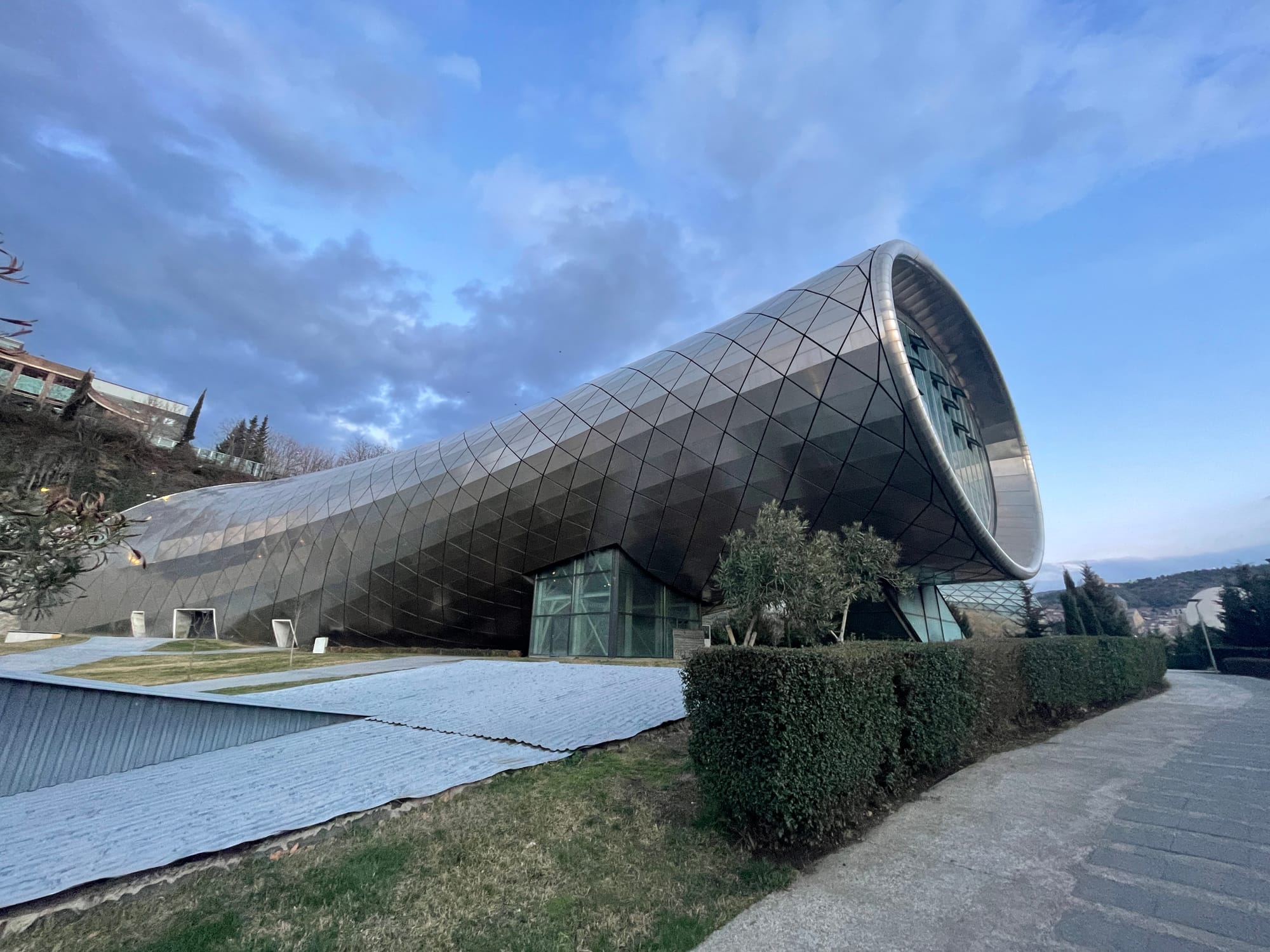
Tbilisi, Georgia — Demolition has begun on the Rike Park Music Theatre and Exhibition Hall, a modernist landmark in the Georgian capital known for its futuristic glass-and-steel design. The complex, commonly referred to as the “Rike Tubes,” has been a prominent feature of Tbilisi’s skyline since its partial completion in the early 2010s.
On Tuesday, crews began dismantling the structure, which was originally commissioned in 2010 under the administration of then-Prime Minister Nika Gilauri and President Mikheil Saakashvili. Construction started in 2011 but was halted in 2012 after the conservative Georgian Dream party assumed power. The project was never completed, leaving the complex in a state of prolonged abandonment.
The demolition permit was issued in June by Tbilisi City Hall’s Architectural Service to the property owner, Rike Dom. The dismantling process is expected to be completed by December. According to local reports and official statements, the decision has drawn sharp criticism from architects, preservationists, and residents who argue that the structure has been a defining element of Tbilisi’s evolving urban landscape.
Italian architects Massimiliano and Doriana Fuksas, of Fuksas Studio, designed the complex to host musical performances and contemporary art exhibitions. Their design featured two interconnected tubular structures, blending modernist aesthetics with functional performance spaces. Despite its unfinished state, the Rike Tubes had become a recognizable landmark, contrasting with Tbilisi’s historic 19th-century architecture.
Critics of the demolition argue that the structure holds architectural and cultural significance. Many residents and urban planners have expressed disappointment, calling the decision shortsighted. “This building was a symbol of Georgia’s forward-looking spirit in the 2000s,” said one local architect who requested anonymity. “Its loss diminishes the city’s architectural diversity.”
Tbilisi City Hall has not provided detailed reasoning for the demolition, though officials have indicated that redevelopment plans may be in progress. The city’s Architectural Service confirmed the permit was issued in accordance with municipal regulations, but did not elaborate on alternative preservation or adaptive reuse proposals.
The Rike Tubes’ demolition follows a broader pattern of urban transformation in Tbilisi, where older structures are frequently replaced with new developments. While some projects aim to modernize the city, others have sparked debates over the preservation of architectural heritage.
As the dismantling continues, preservation advocates are calling for greater transparency regarding the future use of the site. Without further public consultation or official commentary on long-term plans, the demolition of the Rike Tubes remains a contentious issue in Tbilisi’s ongoing urban evolution.
Comments (0)
No comments yet — be the first to weigh in.

Yayoi Kusama’s Death Signals a Kind Fall for Art and Humanity
Hyperallergic reflects on the passing of Yayoi Kusama, Dolly Parton, and Sliman Mansour, while exploring loneliness, AI, and art's role in a changing world.

Tessa Hulls on Her Graphic Memoir 'Feeding Ghosts' on Longform Podcast #571
Writer and artist Tessa Hulls discusses her graphic memoir Feeding Ghosts and the project she spent her life avoiding, on Longform Podcast #571.

Derek Thompson on Longform Podcast: Solving Life's Mysteries Through Writing
Derek Thompson, Atlantic staff writer and Plain English host, discusses his career as a 'dilettante' and love for uncovering mysteries in his Longform Podcast interview.

Rozina Ali on Longform Podcast #573 Discussing Her Career and Reporting
Rozina Ali, a New York Times Magazine writer and National Magazine Award winner, joins the Longform Podcast to discuss her career and latest reporting.

Mumbai’s Vile Parle Cypher is giving unheard rappers a voice

Enrich and Ultimo impress

Karnataka CM Signals Review of 5% Park Land Amendment Bill in Assembly

