DR Congo Battles Deadliest Ebola Outbreak: Causes, Challenges & Response
The DR Congo faces its deadliest Ebola outbreak, driven by the rare Bundibugyo strain, conflict zones, and misdiagnosis delays. Learn about risks, vaccines, and containment efforts.
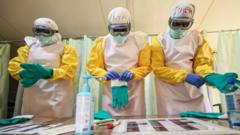
The Democratic Republic of Congo (DR Congo) is grappling with its deadliest Ebola outbreak in history, with the rare Bundibugyo species of the virus spreading rapidly in the eastern provinces. According to United Nations experts, this outbreak is the fastest-growing in terms of new infections, posing significant challenges due to the lack of a licensed vaccine and the region's ongoing conflict.
Ebola, a rare and deadly disease caused by a virus, typically spreads from animals to humans through infected bodily fluids. Symptoms, which appear within two to 21 days, include fever, headache, and fatigue, progressing to vomiting, diarrhea, and in severe cases, organ failure and bleeding. The Bundibugyo species, first detected in Uganda's Bundibugyo district over a decade ago, has caused only two previous outbreaks and has a lower fatality rate of about 48% compared to other strains like Zaire (66.6%) and Sudan (48.5%).
Initial blood tests in DR Congo missed the Bundibugyo strain, as they were designed for more common variants. In July, the UK's Medicines and Healthcare products Regulatory Agency (MHRA) approved the first human trials of a vaccine for Bundibugyo, developed by the University of Oxford using the same technology as the Oxford-AstraZeneca COVID-19 vaccine. The trial involves 50 volunteers aged 18 to 55 in Oxford, aiming to assess the vaccine's safety and immune response. Three other groups are also developing vaccines, though none have entered clinical trials yet.
DR Congo is preparing to test the Ervebo vaccine, which protects against the Zaire species, to see if it is effective against Bundibugyo. The World Health Organization (WHO) is sponsoring a separate trial to evaluate two antiviral therapies—MBP134, an experimental monoclonal antibody, and remdesivir, a treatment also used for COVID-19—for improving survival rates.
The outbreak is centered in Ituri province, with cases also confirmed in neighboring North Kivu and South Kivu, partly controlled by the rebel group AFC-M23. The conflict has displaced over a quarter-million people, complicating containment efforts. The first known case was a nurse in Bunia, the capital of Ituri, who died after likely exposing others during a funeral ceremony.
As of August 23, DR Congo has recorded 5,514 confirmed cases and 2,642 deaths, with 1,200 recoveries. The WHO has allocated $3.9 million, while Africa CDC has pledged $319 million to combat the outbreak. Authorities have expanded testing, surveillance, and treatment centers, banned mass gatherings in affected provinces, and established toll-free lines for reporting symptoms.
Border measures have been tightened across the region, with Rwanda and Uganda restricting travel from DR Congo. The U.S. has extended travel restrictions, requiring returning citizens to quarantine in a third country for 21 days.
Health officials urge residents to avoid contact with infected individuals or animals, refrain from eating raw meat, and practice social distancing.
#EbolaOutbreak #DRCongo #BundibugyoEbola #WHO #IturiProvince #AFCM23 #PublicHealth
Comments (0)
No comments yet — be the first to weigh in.

Ghanaian Youngsters Earn UK Football Trials with Samba Stars Academy
Ghanaian academy backed by Michail Antonio gives young players elite coaching and direct pathways to European clubs through UK trials.

Lionel Messi nets 4 goals in MLS, becomes 1st to reach 927 career goals
Lionel Messi scored four goals in Inter Miami's 7-1 win over CF Montreal, reaching 927 career goals and extending his MLS scoring lead.
Ogun Police Neutralize Two Kidnappers, Rescue Truck Driver
Ogun Police’s Anti‑Kidnapping Unit killed two suspects, rescued a truck driver, and seized AK‑47 rifles, ammunition, phones, and ₦2 million during a raid on August 25.
IGP Olatunji Disu Boosts Mobile Police Readiness to Counter Banditry, Insurgency
Inspector-General of Police Olatunji Disu emphasizes the Mobile Police Force's critical role in combating banditry and insurgency during a training program in Nasarawa State.

Mumbai’s Vile Parle Cypher is giving unheard rappers a voice

Enrich and Ultimo impress

Karnataka CM Signals Review of 5% Park Land Amendment Bill in Assembly

