Expect a Fed Rate Hike. Odds Jump to 60 Percent on Warsh’s Speech

Federal Reserve Chair Kevin Warsh signaled a potential rate hike in September, as market odds of such a move surged to 59.5% from 35.5% following his remarks at the annual Jackson Hole symposium in Wyoming. Warsh, delivering his first major address since assuming leadership of the central bank, emphasized the Federal Reserve’s ongoing commitment to addressing inflationary pressures.
Addressing the economic landscape, Warsh noted that current interest rates—around 3.6%—have yet to meaningfully restrict financial conditions. He pointed to resilient credit and loan markets, describing them as showing "few signs of policy restraint." While acknowledging strains in sectors like housing and agriculture, Warsh stated that broader financial conditions remain accommodative. "On balance, I would be hard-pressed to describe broad financial conditions as restrictive," he said.
Regarding inflation, Warsh acknowledged that recent economic data has exceeded expectations but stressed that progress remains insufficient. He highlighted that roughly half of the items in the Fed’s preferred inflation basket are rising faster than 3%, indicating persistent price pressures across a broad range of goods and services. In contrast to conventional models that suggest wage growth could portend easing inflation, Warsh dismissed its reliability as an indicator, stating, "Wage growth has not proven a reliable indicator of future inflation for a very long time."
Despite concerns over inflation, Warsh struck a cautiously optimistic tone about the economy’s resilience. He noted that business investment has grown at its fastest pace since 2021, while credit spreads remain near historical lows. "Today I am impressed by the overall performance of the economy, which appears to have strengthened," he said. However, he reiterated the Fed’s primary focus: ensuring that underlying inflation moves sustainably toward the central bank’s 2% target.
Newly released economic data further underscored the inflation challenge. The Bureau of Economic Analysis reported that the Personal Consumption Expenditures (PCE) price index rose 0.2% month-over-month in July, exceeding consensus expectations of 0.1%. On an annual basis, PCE inflation has now exceeded the Fed’s 2% target for 65 consecutive months, dating back to March 2021.
The divergence between headline and core inflation measures continues to complicate the Fed’s decision-making. While some observers highlight moderate wage growth as a potential stabilizing factor, Warsh’s remarks suggest that the central bank is not yet persuaded that inflationary pressures are abating.
Market reactions to Warsh’s speech were immediate, with the probability of a September rate hike rising sharply. Analysts suggest that the Fed’s next move will hinge on incoming data, particularly inflation readings and labor market conditions. Despite recent economic resilience, Warsh’s comments indicate a willingness to take further action if inflation fails to decelerate as desired.
The broader economic outlook remains a subject of debate. While some warn of potential asset bubbles—particularly in sectors tied to artificial intelligence—the Fed’s dual mandate of price stability and maximum employment continues to guide its policy stance. As Warsh’s tenure progresses, all eyes will remain on the Fed’s next steps and their implications for financial markets and the broader economy.
Comments (0)
No comments yet — be the first to weigh in.

Free School Uniform Swap Shop Saves Welsh Families £50m Annually
A Cardiff father's school uniform swap shop initiative has grown to 200 schools, helping Welsh families save £50m yearly while promoting sustainability and reducing clothing waste.
Poland, US Explore Permanent Military Bases: Defense Talks Underway
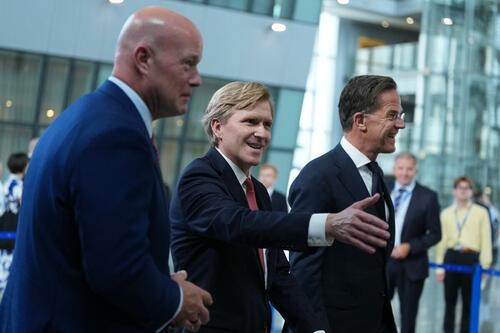
Poland and the US are discussing permanent American military bases in Poland, focusing on defense capabilities rather than troop numbers. Nuclear warheads are not part of the plans.
Taxpayers Lost $65B to Obamacare Fraud in 2024; Feds Crack Down
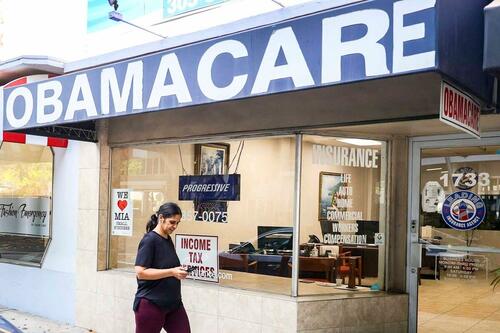
A Paragon Health Institute report reveals $65 billion in taxpayer losses due to Obamacare and Medicaid fraud in 2024, with improper enrollments rising in 2025.
El Niño Delaying 2026 Atlantic Hurricane Season as Dolly Nears Florida
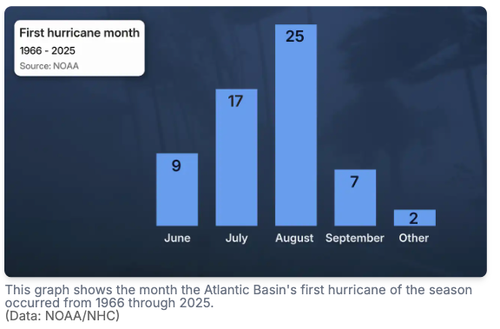
El Niño's wind shear suppresses 2026 Atlantic hurricane activity, delaying first hurricane as Tropical Storm Dolly's remnants approach Florida and the Caribbean.

Mumbai’s Vile Parle Cypher is giving unheard rappers a voice

Enrich and Ultimo impress

Karnataka CM Signals Review of 5% Park Land Amendment Bill in Assembly

