From watching anime to translating shuttlers: Young interpreters' untold story
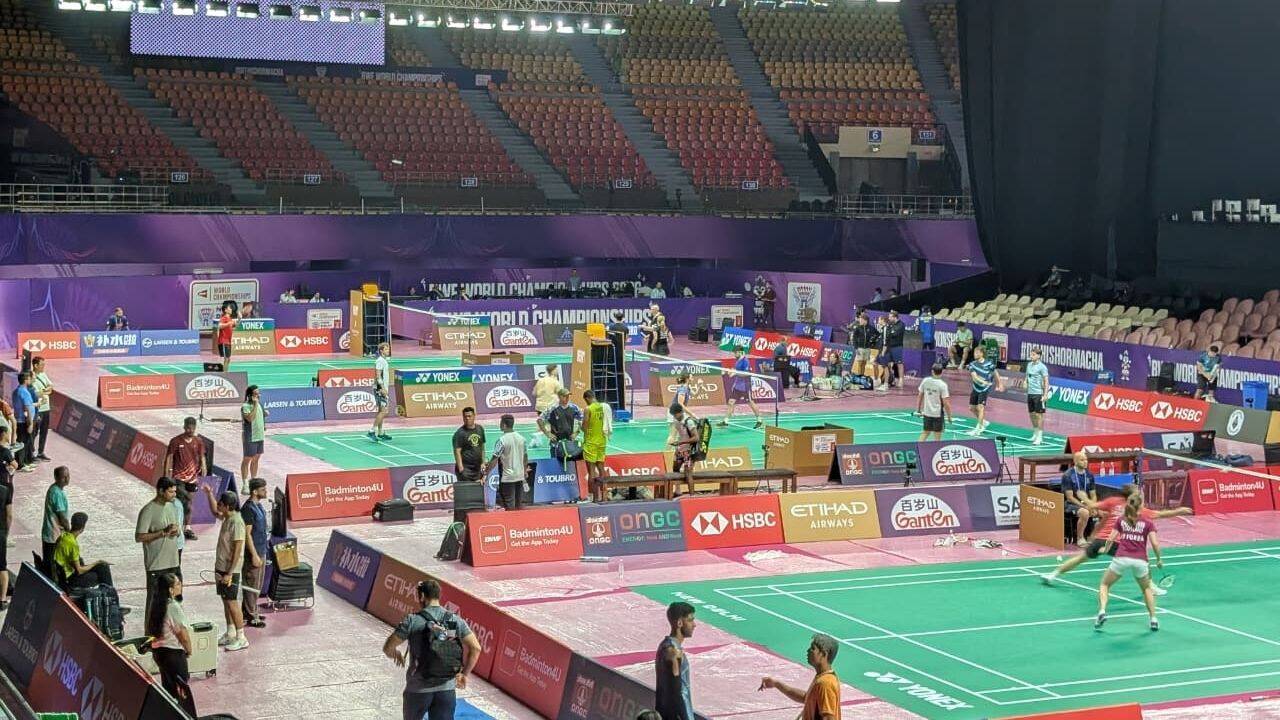
Behind the scenes at international badminton tournaments, young interpreters play an essential role in bridging the communication gap between Chinese shuttlers and global media outlets. Translating Mandarin Chinese—a complex, pictographic language defined by regional dialects, context, and subtle tonal shifts—presents a unique set of challenges for sports language specialists working in high-pressure media environments.
The task of delivering accurate real-time translations for international athletes requires extensive preparation long before players step onto the court. Upon learning of an upcoming tournament, interpreters begin by researching the event's specific context and compiling specialized sports vocabulary. Crucial to this preparation is anticipating the primary topics media representatives are likely to raise during post-match press conferences and mixed zone interviews. Translators carefully prepare for potential questions and forecast how players might respond under various match scenarios.
To familiarize themselves with individual communication styles, interpreters conduct thorough media research by analyzing historical video footage of previous interviews given by Chinese players. This pre-event monitoring allows translation teams to identify specific phrasing, speech patterns, and preferred terminology unique to each shuttler.
Modern technology has become an integral part of this linguistic workflow. Interpreters now routinely incorporate artificial intelligence tools into their study routines. By inputting video content and interview material into AI platforms using customized prompts, language teams can rapidly analyze large volumes of spoken content. The artificial intelligence models help identify frequently repeated words, specialized technical terms, and common conversational patterns, allowing interpreters to construct comprehensive vocabulary lists. These digital insights are then combined with traditional note-taking and manual study methods.
The inherent structural complexity of the Chinese language creates additional hurdles for sports interpreters. Because Mandarin relies on a pictographic script rather than a phonetic alphabet, mastery requires extensive memorization and deep contextual awareness. Regional variations and dialectical differences across China add further layers of complexity, as word meanings often shift depending on regional context, tone, and emphasis.
During live post-match media sessions, interpreters must instantly process these linguistic nuances while maintaining complete factual accuracy and natural phrasing. As elite badminton continues to expand its global television and digital audience, the dedicated work of young interpreters ensures that the perspectives, strategies, and post-match reactions of Chinese shuttlers are clearly and accurately conveyed to sports fans around the world.
#Badminton #LanguageTranslation #Mandarin #SportsMedia #ArtificialIntelligence #Interpreters #China
Comments (0)
No comments yet — be the first to weigh in.

Mumbai’s Vile Parle Cypher is giving unheard rappers a voice
A new documentary streaming on YouTube sheds light on the Vile Parle Cypher, a grassroots hip-hop collective giving a platform to unheard street artists and gig...

Enrich and Ultimo impress
Racehorses Enrich and Ultimo Impress in Tuesday Morning Workouts at Bengaluru Turf Club BENGALURU, Sept 1 – Two rising stars in India’s horse racing circuit, En...

Karnataka CM Signals Review of 5% Park Land Amendment Bill in Assembly
Karnataka Chief Minister D.K. Shivakumar says the controversial 5% park land amendment bill can be re‑examined in the Assembly after protests over Lalbagh land use.

When an organisation deviates from its values, faith of those associated with its ideology is shattered: Kaushal Kishore
Former Union Minister and senior Bharatiya Janata Party (BJP) leader Kaushal Kishore suggested on September 1, 2026, that organizations risk losing public trust...
Mumbai’s Vile Parle Cypher is giving unheard rappers a voice
Enrich and Ultimo impress
Karnataka CM Signals Review of 5% Park Land Amendment Bill in Assembly
