Gaza farmers risk death to revive food production amid war devastation
Gaza's farmers face deadly threats while cultivating land under Israeli fire to combat famine. Despite risks, they restore agriculture amid severe shortages and military occupation.
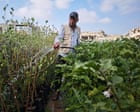
Gaza’s farmers are fighting a fight on multiple fronts as they try to restore food production amid war‑related destruction and ongoing shelling. With the strip’s 2.1 million residents squeezed into an ever‑smaller area, small plots of land are becoming the only source of fresh produce for communities that have suffered severe shortages of water, fertiliser and pesticides. The work is dangerous; dozens of farmers have been killed or wounded in the last year, and many continue to cultivate their fields under the threat of Israeli artillery and drone strikes.
Saqer Abu Rabee, a 48‑year‑old farmer in Beit Lahiya, has lost both his eldest son and his brother to the conflict. In October 2024 a drone‑fired missile struck a field 10 metres from Abu Rabee’s son, killing him at age 24. The son had been a key organizer of a local agricultural collective that encouraged farmers to return to the land. Abu Rabee said the missile was aimed directly at his son, who had no political affiliations, and that his family had received daily threats from the Israeli army, which shelled their area three to four times a day while he worked. His brother Bilal was killed on 2 July while retrieving supplies from a destroyed building, nine months into a partial ceasefire that has seen Israeli forces kill more than 1,200 Palestinians. Abu Rabee believes farmers have become prime targets because they sustain Palestinian communities in the ruins of Gaza.
The Israel Defence Forces deny targeting civilians or farmers, saying they have only responded to threats from Hamas since the October ceasefire. Despite the risks, Abu Rabee continues to work daily on a 1.4‑hectare plot that was an orange orchard before the war. The orchard was bulldozed by Israeli forces, but he and his labourers cleared and rehabilitated the land using only basic tools and manual effort. The family now produces hundreds of thousands of aubergine, tomato and pepper seedlings, selling some to wholesale traders and distributing the rest to other farmers or households to plant in small patches around homes and tents. The influx of local produce has lowered prices in the Beit Lahiya market, with aubergines now costing less than two shekels a kilogram compared with 40 shekels a few months ago, and peppers and mulukhiyah trading at a tenth of their earlier prices. Abu Rabee says the town’s self‑sufficiency has helped prevent famine in Gaza, a region that once served as the strip’s food basket due to fertile soil, fresh groundwater and productive land.
International aid and commercial deliveries have lifted Gaza from last year’s famine conditions, yet United Nations agencies report that 1.4 million people—about 67 % of the population—continue to face crisis levels of acute food insecurity or worse. The UN Food and Agriculture Organization (FAO) warns that the recovery remains fragile without a resurgence in domestic food production. FAO satellite data estimate that only a quarter of Gaza’s pre‑war cropland, 4,100 hectares, remains accessible, and just 3 % (450 hectares) is undamaged, free of debris and ready for immediate cultivation.
Human rights advocacy group Forensic Architecture, using satellite imagery, found that nearly 68 % of Gaza’s flora lies on the Israeli side of the “yellow line” and another 5 % inside a buffer zone marked by an orange line where it is extremely dangerous for Palestinians to venture. The expansion of the yellow line has swallowed up farms in west Beit Lahiya, leaving Abu Rabee’s family with leased land and a shrinking area to cultivate. The loss of fertile farmland, which farmers had painstakingly rebuilt, has left them with nothing at harvest time.
The challenges on the remaining land are severe. With hardly any livestock left, there is little dung‑based fertiliser, so the family improvises by piling decaying vegetation under tarpaulins. They also battle nematodes and other soil infestations, contend with a chronic lack of water, and face the constant, unpredictable threat of death. Stray bullets frequently strike the area, and many people have been wounded in indiscriminate attacks. Abu Rabee admits he fears for his life simply because he is a farmer.
In short, Gaza’s farmers are struggling to keep the food supply chain alive against a backdrop of destruction, resource shortages, and lethal danger. Their resilience has bought a degree of self‑sufficiency for their communities, but the broader picture remains one of fragility, with a large portion of the strip still dependent on external aid and facing severe food insecurity.
Comments (0)
No comments yet — be the first to weigh in.

Iran-US Tensions Escalate Amid Hormuz Strait Crisis – Live Updates
Iranian President Pezeshkian seeks diplomatic solutions with global leaders at SCO summit in Kyrgyzstan amid rising US tensions over Hormuz Strait.

Search continues for 18 passengers after ferry capsized in northern Cyprus
Search and rescue operations are continuing off the coast of Kyrenia in northern Cyprus after a passenger ferry capsized and sank on Sunday, leaving at least ei...

Swiss Man Arrested After Deadly Rave Shooting Kills Italian Woman
A 43-year-old Swiss suspect has been arrested after a shooting at a techno rave in Aarau left one woman dead and several others injured. Authorities continue their investigation.

England attack's 2005 comparisons fair - Trescothick
England’s new pace attack is drawing comparisons to the legendary Ashes-winning quartet of 2005, according to interim head coach Marcus Trescothick. The current...

Mumbai’s Vile Parle Cypher is giving unheard rappers a voice

Enrich and Ultimo impress

Karnataka CM Signals Review of 5% Park Land Amendment Bill in Assembly

