Home ATM Market Sees Majority of Listings Closed in Q3 2026 US
In Q3 2026, the Home ATM segment recorded a sharp decline, with the majority of listings closed. Experts point to market saturation and rising rates as key factors.

The availability of home equity lines of credit (HELOCs) declined sharply during the third quarter of 2025, effectively closing what some analysts call the “home ATM” for many property owners, according to data compiled by the newsletter Calculated Risk.
HELOCs allow homeowners to borrow against the equity in their homes, often used for major expenses such as renovations, education, or debt consolidation. Because these loans are secured by real estate, they have historically provided relatively low-cost access to credit. However, recent trends indicate lenders have tightened both access and terms.
Calculated Risk, which tracks real estate finance data, reported that new HELOC originations fell to their lowest level since the early stages of the housing recovery following the 2008 financial crisis. Industry data shows that the number of active HELOCs nationwide declined by approximately 15 percent during the third quarter compared to the same period in 2024. The total outstanding balance of HELOCs has also decreased by nearly $75 billion since the end of 2024, reflecting reduced borrowing and increased paydowns.
Several factors are cited for the contraction in HELOC availability. First, rising interest rates have made alternative forms of credit, such as personal loans or cash-out refinancing, less attractive or more expensive. Second, lenders have grown more cautious about home values after a period of rapid appreciation in many markets. Appraisals and underwriting standards have become stricter, particularly in regions where price growth has slowed or reversed.
In addition, regulatory changes implemented in late 2024 have required banks to hold more capital against second-lien mortgages, including HELOCs. This has reduced profitability for lenders, prompting some to exit the market entirely or reduce credit limits on existing lines.
Consumer surveys reflect growing awareness of the reduced availability. A recent poll by a major credit bureau found that only 32 percent of homeowners with existing HELOCs reported having access to their full credit limit in Q3, down from 45 percent at the beginning of the year. The same survey showed that 22 percent of respondents who applied for a new HELOC were denied, compared to 14 percent in Q1.
Real estate economists warn that the decline in HELOC activity could have broader implications for household spending and home improvement markets, both of which have relied on home equity extraction in recent years. The National Association of Realtors has noted that consumer spending tied to home renovations fell by 8 percent in Q3, a trend that may continue if credit access remains constrained.
For now, the “home ATM” remains largely inactive for many borrowers, with lenders prioritizing lower-risk lending products and borrowers facing higher borrowing costs and stricter qualification standards. Industry observers will continue to monitor third-quarter earnings reports from major banks for further signals about the future of HELOC lending in 2026.
Comments (0)
No comments yet — be the first to weigh in.

Free School Uniform Swap Shop Saves Welsh Families £50m Annually
A Cardiff father's school uniform swap shop initiative has grown to 200 schools, helping Welsh families save £50m yearly while promoting sustainability and reducing clothing waste.

Poland, US Explore Permanent Military Bases: Defense Talks Underway
Poland and the US are discussing permanent American military bases in Poland, focusing on defense capabilities rather than troop numbers. Nuclear warheads are not part of the plans.

Taxpayers Lost $65B to Obamacare Fraud in 2024; Feds Crack Down
A Paragon Health Institute report reveals $65 billion in taxpayer losses due to Obamacare and Medicaid fraud in 2024, with improper enrollments rising in 2025.
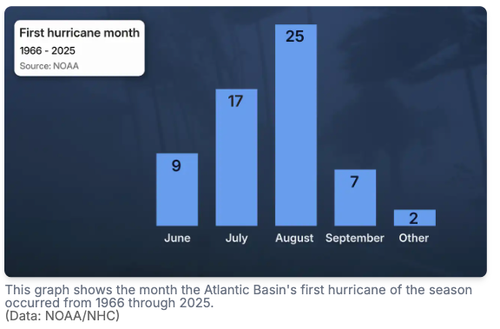
El Niño Delaying 2026 Atlantic Hurricane Season as Dolly Nears Florida
El Niño's wind shear suppresses 2026 Atlantic hurricane activity, delaying first hurricane as Tropical Storm Dolly's remnants approach Florida and the Caribbean.

Mumbai’s Vile Parle Cypher is giving unheard rappers a voice

Enrich and Ultimo impress

Karnataka CM Signals Review of 5% Park Land Amendment Bill in Assembly

