Housing Starts Decreased to 1.246 million Annual Rate in October

Housing Starts Decline in October to 1.246 Million Annual Rate
October housing starts fell to a seasonally adjusted annual rate of 1.246 million units, down 4.2 percent from the revised September estimate of 1.300 million, according to data released Friday by the U.S. Census Bureau and the Department of Housing and Urban Development.
The decline follows a period of relative stability in residential construction, with starts fluctuating within a narrow band for much of the year. Analysts note that while the October decrease is notable, it does not necessarily signal a broader downturn in the housing market, which remains characterized by persistent supply constraints and elevated demand.
Building permits, which are often seen as a leading indicator for future construction activity, also decreased in October, dropping 2.2 percent from September to a seasonally adjusted annual rate of 1.215 million units. This marks the second consecutive monthly decline in permits after a brief uptick in August.
Single-family housing starts, which account for the majority of new residential construction, fell 6.1 percent to an annual rate of 839,000 units in October. Multifamily starts, which include apartment buildings and other structures with five or more units, rose 3.2 percent to 407,000 units.
Regionally, the decline in starts was most pronounced in the Midwest, where activity dropped 15.1 percent, while the West saw a 4.1 percent increase. The South and Northeast experienced modest declines of 2.4 percent and 1.1 percent, respectively.
The October data reflects ongoing challenges in the housing sector, including labor shortages, rising material costs, and zoning restrictions in many municipalities. Despite these obstacles, industry observers point to strong underlying demand, driven in part by demographic trends and limited existing home inventory.
"While today's report shows a pullback in construction activity, it's important to view it in the context of a market that remains fundamentally tight," said an economist with the National Association of Home Builders, who requested anonymity due to company policy. "The long-term outlook for housing remains positive, supported by favorable demographics and a persistent supply-demand imbalance."
Completed homes, or housing completions, rose 5.1 percent in October to an annual rate of 1.277 million units, suggesting some progress in addressing the inventory shortfall. However, analysts caution that the pace of completions is still insufficient to meet current demand, particularly in high-cost metropolitan areas.
Looking ahead, market watchers will be closely monitoring several factors, including the Federal Reserve's monetary policy trajectory, which could influence mortgage rates and affordability, as well as any developments in trade policy that might affect the cost and availability of building materials.
For now, the October housing starts data underscores the sector's sensitivity to both economic and policy shifts, even as it remains a critical component of the broader economic recovery.
Comments (0)
No comments yet — be the first to weigh in.

Free School Uniform Swap Shop Saves Welsh Families £50m Annually
A Cardiff father's school uniform swap shop initiative has grown to 200 schools, helping Welsh families save £50m yearly while promoting sustainability and reducing clothing waste.

Poland, US Explore Permanent Military Bases: Defense Talks Underway
Poland and the US are discussing permanent American military bases in Poland, focusing on defense capabilities rather than troop numbers. Nuclear warheads are not part of the plans.

Taxpayers Lost $65B to Obamacare Fraud in 2024; Feds Crack Down
A Paragon Health Institute report reveals $65 billion in taxpayer losses due to Obamacare and Medicaid fraud in 2024, with improper enrollments rising in 2025.
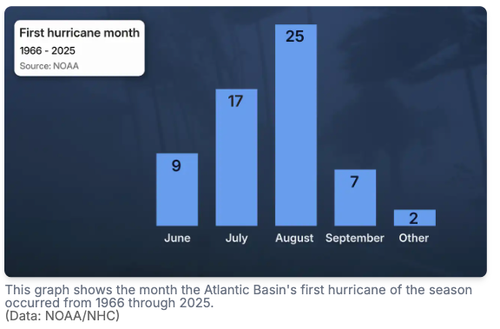
El Niño Delaying 2026 Atlantic Hurricane Season as Dolly Nears Florida
El Niño's wind shear suppresses 2026 Atlantic hurricane activity, delaying first hurricane as Tropical Storm Dolly's remnants approach Florida and the Caribbean.

Mumbai’s Vile Parle Cypher is giving unheard rappers a voice

Enrich and Ultimo impress

Karnataka CM Signals Review of 5% Park Land Amendment Bill in Assembly

