Immigrant Family Embraces New Life in America: Reflections on Memory and Freedom
In 1998, a family of former Eastern Europeans arrives in America, navigating cultural shock, nostalgia, and the promise of freedom while reflecting on their past.
Here’s the rewritten article in clear, objective journalistic prose, adhering to the inverted pyramid structure while maintaining factual accuracy and avoiding fabricated content.
---
Paul and Ana arrived in America on the evening of September 15, 1998, their first glimpse of the country framed by clouds and the windows of their plane. Holding hands, they stared past the glass, their bodies trembling with anticipation as they took in the vast, unfamiliar landscape beneath them. For them, the millennium had come early—this was not just a new country, but a new beginning.
Nine years earlier, their daughter Maya had questioned the idea of leaving yet another country when she was told the family would soon relocate. "What if I don’t want to live in any country?" she had asked. The response was firm: leaving was not an option. The exchange had been playful but underscored the weight of displacement in their lives.
For Paul and Ana, America at first felt like pure fiction—a "lifetime special" of new experiences. The first months were filled with wonder: the dazzling lights of Times Square, the endless aisles of department stores, the convenience of pizza delivered to their door. Teresa, their daughter, often reminded Maya that what seemed ordinary to them was extraordinary to their parents. She pointed out the novelty of everyday things—a teenager bringing food to their home, people with purple hair, women with tongue piercings, men with facial tattoos—all of it fresh and bewildering.
Despite their combined 140 years of life, Paul and Ana found themselves unable to grow jaded. The Manhattan skyline, emerging from the haze of the Long Island Expressway, struck them with its grandeur. The city’s energy—the crowded streets, the mix of people, the symphony of movement—felt like a mosaic of brilliant colors, a timeless spectacle that left them breathless.
The move to America was a profound experience for Paul, who saw it as something of a swan song—a postscript to a life marked by survival. They had endured the whims of foreign rulers, the brutality of war, and the upheavals of revolution. In 1989, the fall of the Berlin Wall and the collapse of communist regimes had inverted their world. Walls crumbled, airspaces opened, and enemies became allies. For a brief moment, it seemed as though history itself had been rewritten.
Yet the euphoria of freedom was short-lived. The transition to capitalism brought unforeseen consequences. Scarcity gave way to abundance, but the promises of prosperity were unevenly distributed. Politicians handed out blue jeans on the streets, while politicians and pop stars like Michael Jackson became symbols of a new, intoxicating culture. Brazilian telenovelas replaced state propaganda on television, and the allure of consumerism swept through the land.
For Ana, the move meant the chance to pray to her Virgin Mary in peace, to bless her family, and to celebrate the birth of Maya—a child born on the cusp of freedom. For Paul, it was a return to productivity, as he worked to decommunize laws and institutionalize democracy in the wake of the Soviet Union’s collapse.
But the side effects of this transition were harsh. Pensions vanished, livelihoods were threatened, and those who had once relied on the stability of dictatorship now faced uncertainty. The unbridled capitalism that followed 1989 left many disillusioned, their faith in freedom shaken by the realities of economic hardship.
Teresa, now a doctor, had her own reasons for embracing America. She began campaigning almost immediately to bring her parents to the U.S., undeterred by the unpredictability of immigration policies. For Paul, though he recognized the inevitability of the move—Ana deserved to grow old with her children—he could not shake the irony of it all. Freedom had arrived just as he turned 60, but the ghosts of the past lingered.
As Teresa and others like her carved out new lives in America, the question remained: How long would the promise of freedom take to fulfill? For now, they pressed on, burrowing into the cracks of opportunity, hoping for a future where democracy and prosperity would align.
Comments (0)
No comments yet — be the first to weigh in.
Yayoi Kusama’s Death Signals a Kind Fall for Art and Humanity
Hyperallergic reflects on the passing of Yayoi Kusama, Dolly Parton, and Sliman Mansour, while exploring loneliness, AI, and art's role in a changing world.

Tessa Hulls on Her Graphic Memoir 'Feeding Ghosts' on Longform Podcast #571
Writer and artist Tessa Hulls discusses her graphic memoir Feeding Ghosts and the project she spent her life avoiding, on Longform Podcast #571.

Derek Thompson on Longform Podcast: Solving Life's Mysteries Through Writing
Derek Thompson, Atlantic staff writer and Plain English host, discusses his career as a 'dilettante' and love for uncovering mysteries in his Longform Podcast interview.
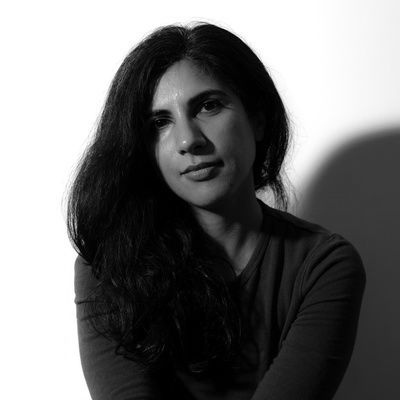
Rozina Ali on Longform Podcast #573 Discussing Her Career and Reporting
Rozina Ali, a New York Times Magazine writer and National Magazine Award winner, joins the Longform Podcast to discuss her career and latest reporting.

Mumbai’s Vile Parle Cypher is giving unheard rappers a voice

Enrich and Ultimo impress

Karnataka CM Signals Review of 5% Park Land Amendment Bill in Assembly

