Justice Bhuyan Critiques India's Unused Provision for Legal Academics in SC
Supreme Court judge highlights why Article 124(3) allowing 'distinguished jurist' appointments in SC has never been used in 76 years, urging exploration of academia's potential.
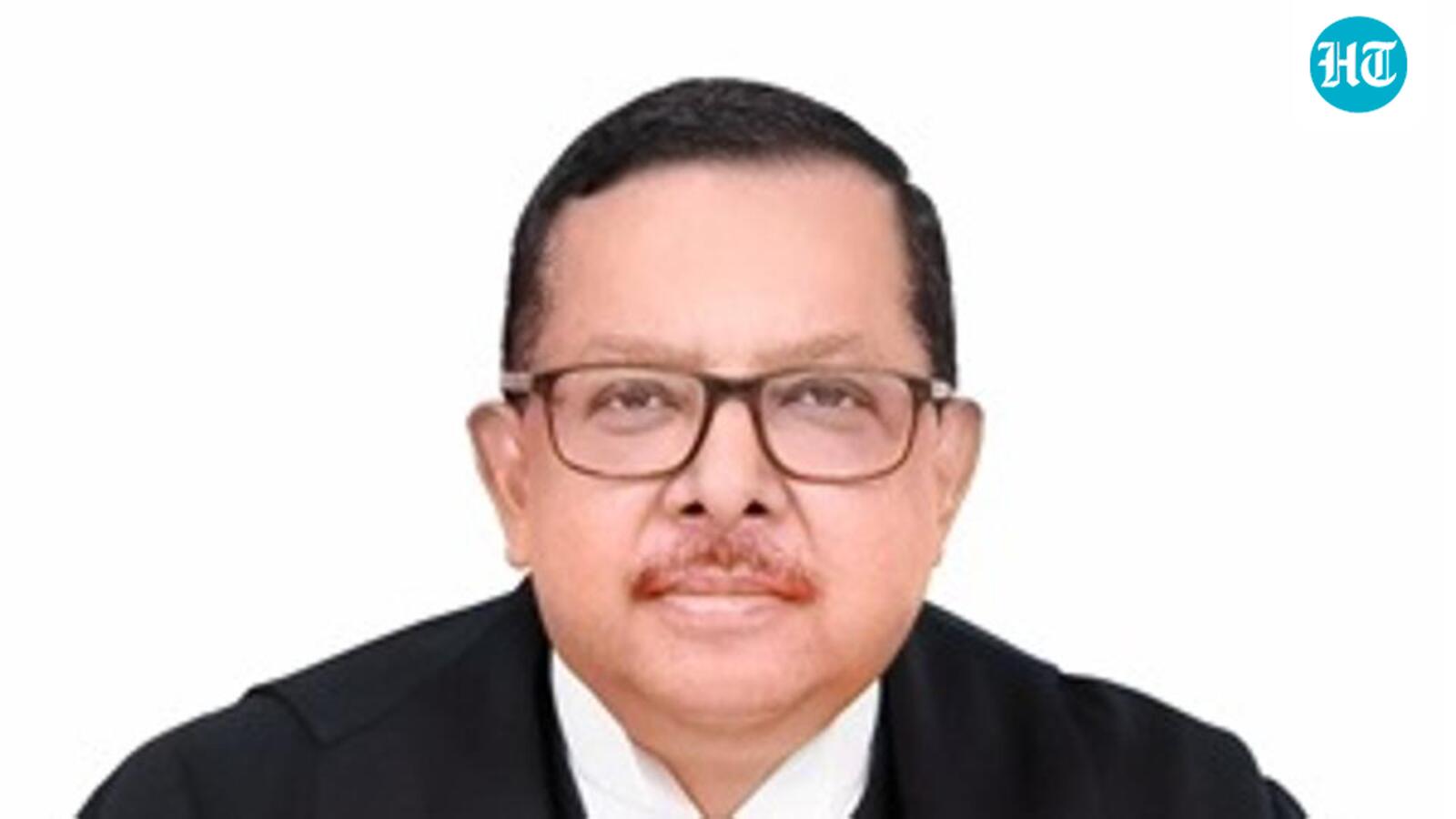
Supreme Court judge Justice Ujjal Bhuyan has highlighted the underutilization of a constitutional provision that allows the appointment of a “distinguished jurist” to India’s highest court, questioning why no legal academic has ever been elevated to the Supreme Court in its 76-year history.
Speaking at the 13th convocation of the National Law University, Delhi’s LL.M. programme, Justice Bhuyan pointed to Article 124(3) of the Constitution, which explicitly permits the appointment of a person recognized as a distinguished jurist as a Supreme Court judge. Yet, despite this provision, no academic from India’s legal fraternity has ever been appointed to the top court.
Justice Bhuyan suggested two possible reasons for this oversight. Either there is insufficient depth in Indian legal academia to warrant such appointments, or the Centre and the Supreme Court collegium have simply never seriously explored the possibility. He noted that the Constituent Assembly had envisioned a broader role for academics and jurists in the judiciary, with members like HV Kamath and M Ananthasayanam Ayyangar advocating for the inclusion of law professors and university deans.
The judge dismissed the argument that legal academics lack the practical experience needed to serve as judges, describing it as “very shallow.” He emphasized that the Supreme Court is not just the country’s highest adjudicatory body but also its “moral, legal and constitutional conscience keeper.” Including distinguished jurists, he argued, would diversify the bench and bring valuable academic scholarship to judicial decision-making.
Justice Bhuyan drew comparisons with other jurisdictions, noting that countries like the US, UK, Canada, and Kenya have appointed academics to their constitutional courts. In the US, figures such as Felix Frankfurter, Antonin Scalia, Ruth Bader Ginsburg, and Stephen Breyer had teaching backgrounds before their judicial appointments. Similarly, in the UK, former Supreme Court president Lady Hale and Justice Andrew Burrows had substantial academic careers.
“It is regrettable that this provision has remained one of our Constitution’s unused mandates,” Justice Bhuyan remarked, adding that the issue required “serious attention.”
In his address, Justice Bhuyan also underscored the importance of universities as spaces for free thought, disagreement, and dissent. He told graduating students that legal education should instill not just knowledge of the law but also the courage to question established assumptions and assess whether the law serves justice.
“It allows different views to be expressed, examined, and debated,” he said, stressing that a democratic society cannot thrive on the assumption that everyone thinks alike. His comments come amid recent controversies involving law students, university administrations, and the legal establishment.
Days before his speech, a dispute erupted involving the Bar Council of India (BCI), NALSAR University of Law in Hyderabad, and Chief Justice of India Surya Kant. The BCI, led by Chairman Manan Kumar Mishra, had directed state bar councils not to enroll NALSAR’s 2026 graduating batch as advocates, following protests by some students over the CJI’s proposed participation in their convocation. The directive was withdrawn within hours after widespread criticism.
The Supreme Court later questioned the BCI’s intervention, with Chief Justice Kant observing that students have the right to protest peacefully and questioning the council’s jurisdiction over the matter. Mishra later apologized to law students, acknowledging that their concerns deserved to be heard “with patience, sensitivity, and respect.”
The controversy also affected the National Law School of India University in Bengaluru, where students and alumni objected to the presence of both Mishra and the CJI at its convocation, demanding an apology from the BCI chairman. The university subsequently canceled its 2026 convocation amid the ongoing dispute.
Justice Bhuyan reiterated that constitutional democracy requires institutions to accommodate differences rather than treat dissent as a threat. “The freedom to express an opinion, to disagree with the prevailing view, and to participate in public life would be meaningful only when there is space for dissent,” he said.
He described tolerance not just as a matter of courtesy but as a constitutional value, citing Justice O Chinnappa Reddy’s observation in *Bijoe Emmanuel* that “our Constitution practises tolerance.” A democracy’s maturity, he argued, is reflected in how it treats unpopular or inconvenient views.
“A university is not merely an institution that transfers knowledge from one generation to another,” he said. “It should be a place where established positions can be questioned and disagreements take place through reason rather than hostility.”
For law students and future legal professionals, Justice Bhuyan emphasized the responsibility to ensure that liberty, equality, dignity, and justice remain central to the law, even amid disagreement and dissent.
#SupremeCourt #JudicialAppointments #LegalEducation #JusticeUjjalBhuyan #SupremeCourtCollegium #NALSARUniversity #BarCouncilOfIndia #ConstitutionalLaw
Comments (0)
No comments yet — be the first to weigh in.

Mumbai’s Vile Parle Cypher is giving unheard rappers a voice
A new documentary streaming on YouTube sheds light on the Vile Parle Cypher, a grassroots hip-hop collective giving a platform to unheard street artists and gig...

Enrich and Ultimo impress
Racehorses Enrich and Ultimo Impress in Tuesday Morning Workouts at Bengaluru Turf Club BENGALURU, Sept 1 – Two rising stars in India’s horse racing circuit, En...

Karnataka CM Signals Review of 5% Park Land Amendment Bill in Assembly
Karnataka Chief Minister D.K. Shivakumar says the controversial 5% park land amendment bill can be re‑examined in the Assembly after protests over Lalbagh land use.

When an organisation deviates from its values, faith of those associated with its ideology is shattered: Kaushal Kishore
Former Union Minister and senior Bharatiya Janata Party (BJP) leader Kaushal Kishore suggested on September 1, 2026, that organizations risk losing public trust...
Mumbai’s Vile Parle Cypher is giving unheard rappers a voice
Enrich and Ultimo impress
Karnataka CM Signals Review of 5% Park Land Amendment Bill in Assembly
