NASA is about to launch a space telescope that could change how we see the universe
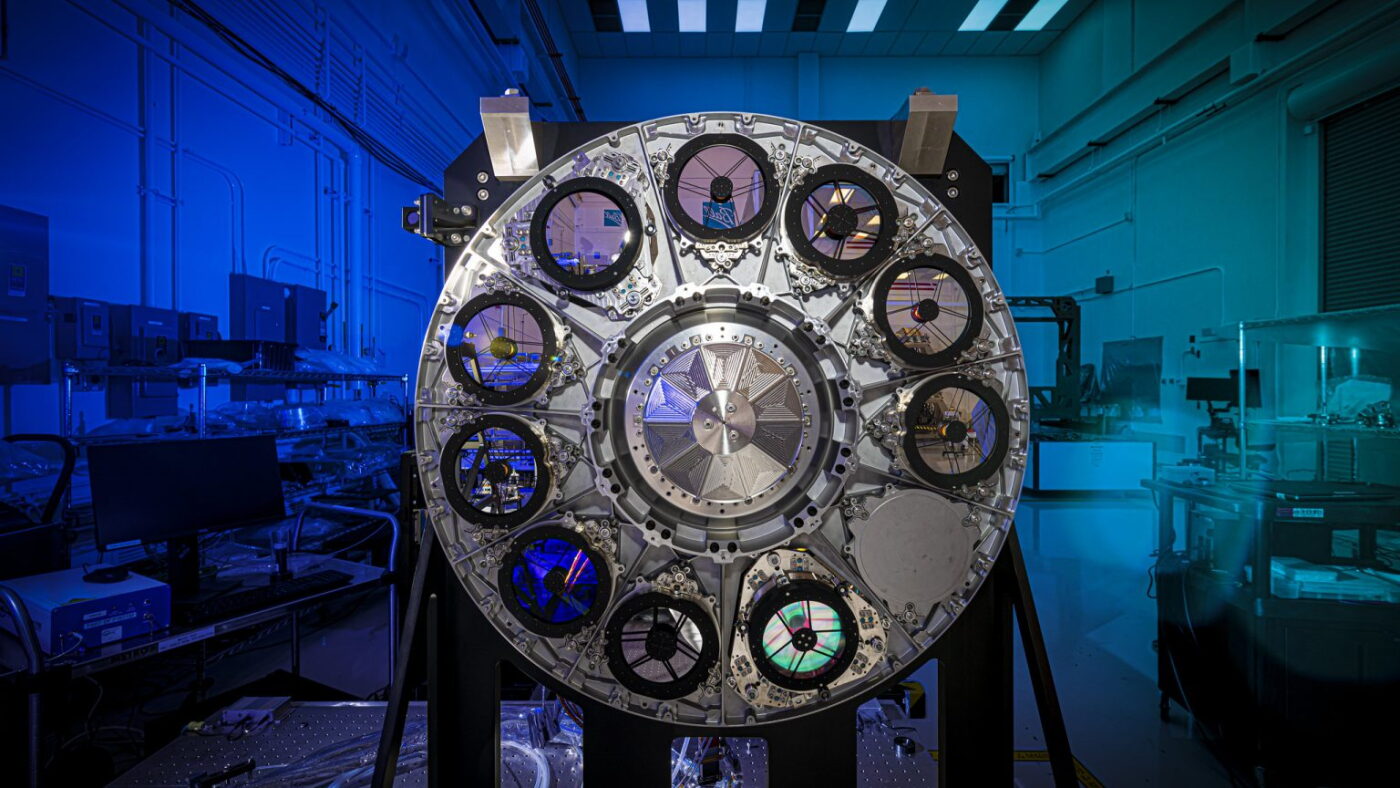
NASA is set to launch the Nancy Grace Roman Space Telescope on August 30, 2024. The $4.3 billion observatory, named after the agency’s first chief astronomer, will orbit the Sun at the L2 Lagrange point and begin a five‑year mission that aims to map the universe’s expansion and discover thousands of exoplanets.
The Roman telescope is a successor to earlier plans for a space‑based survey instrument that would have helped measure Type Ia supernovae, the “standard candles” that revealed the accelerating expansion of the cosmos. The new mission will use a wide‑field camera and a powerful infrared spectrometer to survey large swaths of sky far more quickly than the Hubble Space Telescope, which has similar sensitivity but a much smaller field of view.
“We’re looking for planets that are just completely undetectable by any other method,” said Scott Gauti of Ohio State University, who has developed a technique called gravitational microlensing to find planets that bend starlight as they pass in front of distant stars. “That includes planets at the center of our galaxy, that are very analogous to our own solar system planets like Jupiter, Saturn, Uranus, and Neptune.”
Roman’s science team also plans a one‑month survey of every star in the Milky Way. Julie McEnery, the project scientist, explained that such a survey would take about a century with Hubble. “The design lets us do things much faster,” she said, adding that the resulting catalogs will be publicly available so teachers, students, and researchers worldwide can access the data simultaneously.
The telescope’s large field of view also makes it ideal for mapping the distribution of dark matter and testing models of cosmic expansion. Cosmologist Daniel Scolnic of Duke University said that finding more Type Ia supernovae will be key to refining measurements of dark energy. “In the last few years, there have been measurements saying that the model might be wrong — and that’s something that Roman will absolutely nail, whether the model’s right or wrong,” he said.
The observatory’s origins trace back to a partnership with the National Reconnaissance Office, which had an unused satellite in a hangar. “We have this amazing satellite sitting in a hangar that we’re not using,” Scolnic recalled. “What do you guys think about instead of pointing downwards, we point upwards, and you guys use it?”
The mission’s broad survey approach is expected to yield unexpected discoveries. “The history of astronomy really has shown that when you get a new capability, and especially a survey capability, you learn something new, something unexpected,” said Wendy Freedman, an astronomer at the University of Chicago. “Often that turns out to be the most exciting part of a new facility. So I am completely open to what this telescope will find.”
NASA’s launch will be conducted from the Johnson Space Center’s Space Launch Complex 41, with a Falcon 9 rocket carrying the telescope into a halo orbit around L2. The launch window opens on August 30, and the telescope will then be deployed and calibrated before beginning its scientific observations. The Roman Space Telescope is expected to transform the field of cosmology and exoplanet science by providing the largest, deepest survey of the universe to date.
Comments (0)
No comments yet — be the first to weigh in.

Iran-US Tensions Escalate Amid Hormuz Strait Crisis – Live Updates
Iranian President Pezeshkian seeks diplomatic solutions with global leaders at SCO summit in Kyrgyzstan amid rising US tensions over Hormuz Strait.

Search continues for 18 passengers after ferry capsized in northern Cyprus
Search and rescue operations are continuing off the coast of Kyrenia in northern Cyprus after a passenger ferry capsized and sank on Sunday, leaving at least ei...

Swiss Man Arrested After Deadly Rave Shooting Kills Italian Woman
A 43-year-old Swiss suspect has been arrested after a shooting at a techno rave in Aarau left one woman dead and several others injured. Authorities continue their investigation.

England attack's 2005 comparisons fair - Trescothick
England’s new pace attack is drawing comparisons to the legendary Ashes-winning quartet of 2005, according to interim head coach Marcus Trescothick. The current...

Mumbai’s Vile Parle Cypher is giving unheard rappers a voice

Enrich and Ultimo impress

Karnataka CM Signals Review of 5% Park Land Amendment Bill in Assembly

