Nepal-Tibet Border Floods Death Toll Rises to 623
Nepal-Tibet border floods death toll climbs to 623, with authorities warning of further risks as rescue operations continue.
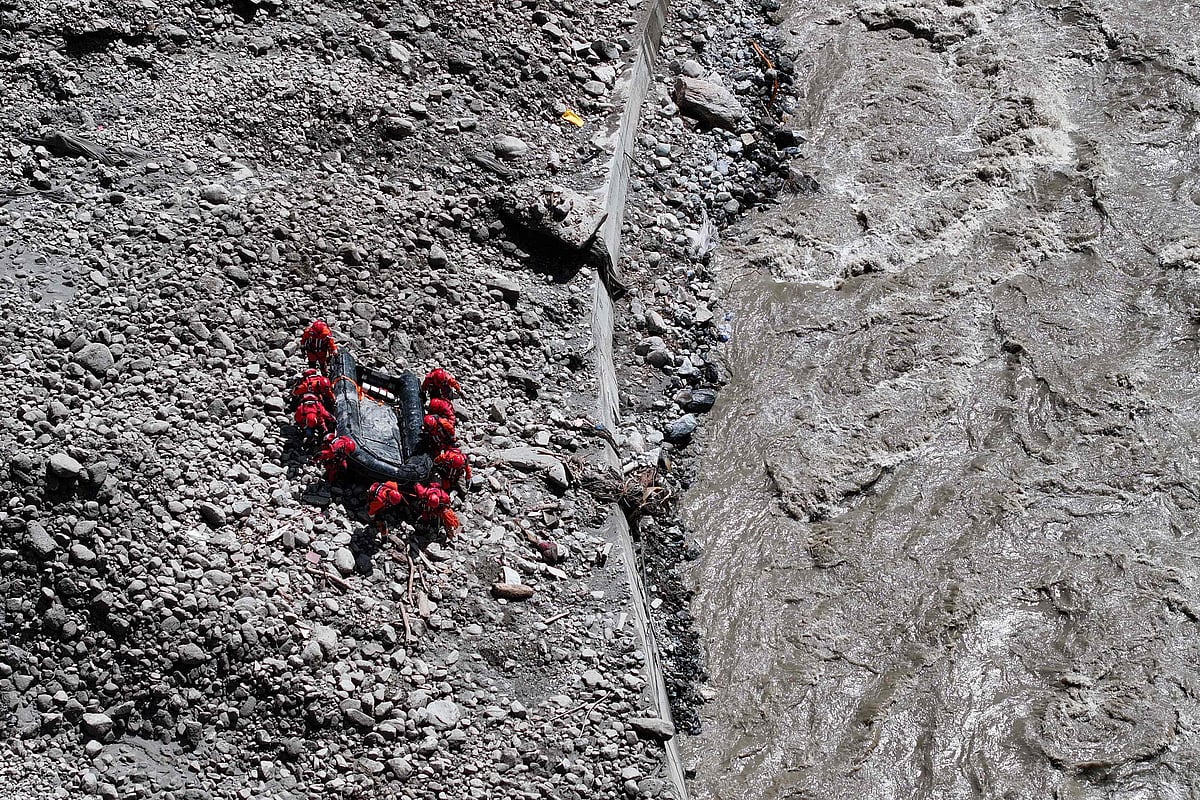
Nepal’s National Police confirmed on Saturday that devastating floods along the Nepal-Tibet border have claimed at least 616 lives, marking a sharp rise in the death toll since the disaster struck three days earlier. The announcement comes one day after Chinese state media reported seven additional fatalities, bringing the total number of confirmed deaths to at least 623. Rescue and recovery operations are ongoing as authorities warn that the toll may continue to rise due to extensive damage and ongoing landslides.
Flooding and landslides triggered by heavy monsoon rains have ravaged districts along the Himalayan border between Nepal and the Tibet Autonomous Region of China. The disaster has destroyed homes, roads, and critical infrastructure, cutting off remote communities and complicating relief efforts. Local officials report widespread destruction in areas such as Sindhupalchok, Dhading, and Nuwakot, with entire villages reportedly swept away by surging waters.
Nepal’s Prime Minister Pushpa Kamal Dahal, also known as Prachanda, held an emergency meeting with cabinet members and security officials on Saturday to assess the situation and coordinate response efforts. “The government is prioritizing search and rescue operations and ensuring the safety of affected communities,” a spokesperson for the Prime Minister’s Office said. The Nepal Army, Nepal Police, and Armed Police Force have deployed teams to the worst-hit regions, using helicopters to reach isolated areas where road access has been severed by landslides.
International aid agencies, including the International Federation of Red Cross and Red Crescent Societies (IFRC), have pledged support. “We are working closely with local authorities to provide emergency relief, including shelter, clean water, and medical assistance,” said an IFRC spokesperson. The United Nations Office for the Coordination of Humanitarian Affairs (OCHA) has also activated emergency response protocols and is monitoring the situation in coordination with both Nepali and Chinese authorities.
Weather forecasts predict continued rainfall in the coming days, raising concerns about further flooding and landslides. The Department of Hydrology and Meteorology has issued warnings for several river basins, urging residents in low-lying areas to evacuate immediately. In China’s Tibet Autonomous Region, authorities have reported significant damage to roads and bridges, particularly in Nyingchi and Shannan prefectures, which border Nepal.
The rising death toll reflects the severity of the disaster, which has affected thousands of families across two countries. Survivors describe harrowing scenes of destruction, with homes buried under mudslides and communities cut off for days. Rescue workers continue to recover bodies as the full extent of the damage becomes clearer.
As the crisis deepens, both Nepal and China are appealing for international assistance and urging coordinated relief efforts. The scale of the disaster underscores the vulnerability of Himalayan communities to extreme weather events linked to climate change.
#NepalFloods #ChinaTibet #DisasterResponse #Monsoon2024 #CrossBorderCrisis #HumanitarianAid #ClimateEmergency
Comments (0)
No comments yet — be the first to weigh in.

Mumbai’s Vile Parle Cypher is giving unheard rappers a voice
A new documentary streaming on YouTube sheds light on the Vile Parle Cypher, a grassroots hip-hop collective giving a platform to unheard street artists and gig...

Enrich and Ultimo impress
Racehorses Enrich and Ultimo Impress in Tuesday Morning Workouts at Bengaluru Turf Club BENGALURU, Sept 1 – Two rising stars in India’s horse racing circuit, En...

Karnataka CM Signals Review of 5% Park Land Amendment Bill in Assembly
Karnataka Chief Minister D.K. Shivakumar says the controversial 5% park land amendment bill can be re‑examined in the Assembly after protests over Lalbagh land use.

When an organisation deviates from its values, faith of those associated with its ideology is shattered: Kaushal Kishore
Former Union Minister and senior Bharatiya Janata Party (BJP) leader Kaushal Kishore suggested on September 1, 2026, that organizations risk losing public trust...
Mumbai’s Vile Parle Cypher is giving unheard rappers a voice
Enrich and Ultimo impress
Karnataka CM Signals Review of 5% Park Land Amendment Bill in Assembly
