Partial lunar eclipse to turn UK's Sturgeon Moon red on Friday - visibility guide
UK skywatchers may witness a rare partial lunar eclipse early Friday, turning the Sturgeon Moon red. Cloud cover may affect visibility in some regions.
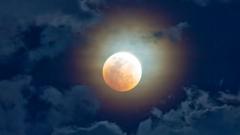
Partial lunar eclipse will light up the UK skies on Friday evening, but cloud cover could limit visibility for many. The event, which will begin at 02:23 BST as the Moon enters the Earth’s penumbra, is expected to reach maximum coverage at 05:12 BST when about 93 % of the Moon is shrouded in the umbra. The eclipse will end at 06:51 BST, but by that time the Moon will have set for most observers.
Skywatchers in southern and eastern England, as well as parts of northern Ireland and western Scotland, are advised to look toward the south‑west horizon for the best chance of seeing the red‑tinged “Sturgeon Moon”. The Moon will be low on the horizon, making it appear larger due to the well‑known Moon illusion, and the reddish hue will be produced by Earth’s atmosphere filtering sunlight before it reaches the Moon.
The eclipse follows a spectacular partial solar eclipse that took place in the UK just weeks earlier, the most dramatic of its kind in almost three decades. The lunar event will begin when the Moon enters the faint outer edge of the Earth’s shadow, the penumbra, causing a slight dimming that will be barely noticeable to most viewers. The main phase starts at 03:33 BST when the Moon moves into the darker umbra. By 05:12 BST, the eclipse reaches its peak, with 93 % of the Moon in shadow. The partial phase ends at 06:51 BST, but the Moon will have set before that time for many locations.
Moonset times vary across the country: 06:00 BST in Lerwick, 06:15 BST in London and 06:42 BST in Enniskillen. Because the Moon will be very low in the south‑west sky, the Moon illusion will make it appear larger than usual. The illusion occurs when the Moon is near the horizon, seen alongside familiar objects on the ground, and is a visual effect caused by how the brain processes spatial cues.
The reddish colour of the eclipsed Moon is due to sunlight passing through the Earth’s atmosphere. Shorter blue wavelengths scatter more easily, while longer red wavelengths reach the Moon and are reflected back to Earth, giving the Moon its blood‑red appearance.
Astronomers recommend observers seek high ground with an unobstructed view of the south‑west horizon. Clear skies will be essential, and the weather forecast indicates that a low‑pressure system will be overhead, bringing a chance of cloud and showers. However, the system’s centre will be under slack winds, making it difficult for forecasters to predict exactly where clouds will drift. While some areas, such as East Anglia, south‑east England, western Scotland and Northern Ireland, are likely to have clearer skies, other regions may experience cloud cover with occasional breaks that could change hour by hour.
The Royal Observatory, Greenwich, has provided the eclipse timings and phases for London, and the BBC Weather app and website will offer hourly updates for those wishing to track the weather conditions in real time. Viewers should plan ahead, choose a high, unobstructed location, and keep an eye on the latest forecast to maximise their chances of witnessing the partial lunar eclipse on Friday night.
Comments (0)
No comments yet — be the first to weigh in.

NASA Launches Nancy Grace Roman Telescope to Unlock Universe's Mysteries
NASA's new Nancy Grace Roman Space Telescope lifts off from Florida to study dark energy, exoplanets, and cosmic mysteries with unprecedented precision and scope.

Nature reserves spot rare species during heatwaves
Nature reserves in Hertfordshire and Middlesex have documented rare species this summer, with volunteers spotting wildlife not seen in decades and some even for...

Inmates at HMP La Moye craft boxes to save Jersey's hedgehogs
Prisoners at HMP La Moye have crafted nesting and feeding boxes to support Jersey's hedgehog population, boosting rehabilitation and community engagement.

2026 Nepal Flood: Ice‑Rock Avalanche, Glacial Lake Outburst and Climate‑Change Risks
A massive ice‑rock avalanche triggered a catastrophic flood in Nepal on Aug. 26 2026, followed by a glacial lake outburst that devastated towns and hydropower plants. Climate‑change‑driven thawing increased the risk.

Mumbai’s Vile Parle Cypher is giving unheard rappers a voice

Enrich and Ultimo impress

Karnataka CM Signals Review of 5% Park Land Amendment Bill in Assembly

