Republicans Pitch Plan To Protect Investments From 'Inflation Tax': What To Know
Republican lawmakers have proposed legislation to adjust capital gains taxes for inflation, a move they say would provide relief to investors, homeowners, and savers amid rising prices. The Capital Gains Inflation Relief Act of 2025, introduced by Sen. Ted Cruz (R-Tex.) and co-sponsored by Sen. Tim Scott (R-S.C.), seeks to index capital gains to inflation. House Republicans have also urged Treasury Secretary Scott Bessent to implement the change without congressional approval.
Under current tax law, capital gains are taxed based on the difference between the purchase price and the sales price of an asset, known as nominal gains. For assets held longer than one year, the capital gains tax rate ranges from zero to 20 percent, depending on the filer’s income. However, inflation can erode the value of these gains over time, leading to higher tax burdens. Since 2020, the U.S. dollar has lost about 29 percent of its value to inflation, according to the Cato Institute. In cases of high inflation and low growth, the effective capital gains tax rate can exceed 100 percent, meaning investors may owe taxes on phantom income that doesn’t represent real economic gain.
Inflation indexing would adjust the cost basis of an asset to reflect inflation during the holding period, ensuring that only real economic gains are taxed. Proponents argue this change would encourage investment and align tax policy with economic reality. Critics, however, warn that it could further strain government revenue. The Peter G. Peterson Foundation estimates that capital gains taxes accounted for about 10 percent of total federal receipts in 2025.
Opponents, such as the Institute on Taxation and Economic Policy, contend that inflation indexing would disproportionately benefit wealthy investors. According to Yale University’s Budget Lab, indexing all existing assets to inflation could reduce federal revenue by nearly $1 trillion over a decade, while limiting the change to new asset purchases would reduce revenue by about $170 billion. The Congressional Research Service (CRS) found that capital gains are concentrated among higher-income earners, with the top 1 percent accounting for 75.4 percent of such gains.
However, a broader segment of Americans would benefit from inflation indexing. A 2020 IRS report noted that 68 percent of taxpayers subject to capital gains taxes earned less than $200,000 annually. Homeowners would also see relief, as the tax code already favors real estate through deductions and exemptions. For example, single filers can exclude up to $250,000 in capital gains from the sale of a primary residence, while joint filers can exclude up to $500,000.
Retirees with 401(k) savings would generally not benefit, as those funds are taxed as income upon withdrawal rather than as capital gains. Additionally, the legality of implementing inflation indexing without congressional approval remains uncertain. A similar proposal was considered during the George H.W. Bush administration, but the Congressional Research Service concluded in 1992 that the executive branch lacked the authority to enact such changes unilaterally.
States also vary widely in their treatment of capital gains taxes. Residents in states like Texas and Florida do not pay state taxes on capital gains, while states such as California impose rates as high as 13.3 percent. The proposal’s fate remains unclear, as the Treasury has not indicated whether it will act on the request.
Comments (0)
No comments yet — be the first to weigh in.

Free School Uniform Swap Shop Saves Welsh Families £50m Annually
A Cardiff father's school uniform swap shop initiative has grown to 200 schools, helping Welsh families save £50m yearly while promoting sustainability and reducing clothing waste.

Poland, US Explore Permanent Military Bases: Defense Talks Underway
Poland and the US are discussing permanent American military bases in Poland, focusing on defense capabilities rather than troop numbers. Nuclear warheads are not part of the plans.

Taxpayers Lost $65B to Obamacare Fraud in 2024; Feds Crack Down
A Paragon Health Institute report reveals $65 billion in taxpayer losses due to Obamacare and Medicaid fraud in 2024, with improper enrollments rising in 2025.
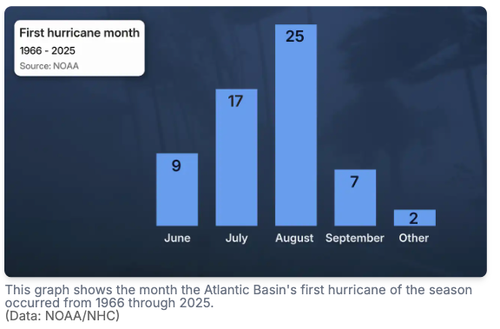
El Niño Delaying 2026 Atlantic Hurricane Season as Dolly Nears Florida
El Niño's wind shear suppresses 2026 Atlantic hurricane activity, delaying first hurricane as Tropical Storm Dolly's remnants approach Florida and the Caribbean.

Mumbai’s Vile Parle Cypher is giving unheard rappers a voice

Enrich and Ultimo impress

Karnataka CM Signals Review of 5% Park Land Amendment Bill in Assembly

