The BLS Annual Benchmark Revision for March 2026 Is -178,000 Private Jobs

The Bureau of Labor Statistics (BLS) has announced a preliminary benchmark revision to March 2026 employment figures, reducing the total number of jobs by 79,000. This revision, the smallest since 2021, follows a downward adjustment of 178,000 private-sector jobs. The data reflects revisions made to employment estimates derived from the Quarterly Census of Employment and Wages (QCEW) program.
According to the BLS, the preliminary benchmark revision for March 2026—based on data from March 2025—stands at -79,000 total jobs. The revision encompasses adjustments across multiple sectors, with private employment accounting for the largest share of the downward revision. Economists and labor market analysts note that the magnitude of this revision is notably smaller than those observed in previous years, suggesting a potential stabilization in employment data reporting.
Labor market analysts suggest that the era of large annual benchmark revisions may be concluding. The pace of job creation and labor market turnover has slowed, contributing to more modest revisions moving forward. Additionally, the BLS has implemented changes to its birth-death model, which adjusts for business births and deaths not captured in monthly surveys. This methodological adjustment may further influence the accuracy of future employment estimates.
For 2027, analysts anticipate revisions similar in scale to those observed in 2017, 2018, or 2021, with an expected margin of error within ±0.1 percent. This projection indicates a potential return to more stable employment data following a period of significant revisions.
Earlier in the year, employment trends showed mixed signals compared to 2025. Certain sectors experienced growth, while others faced declines, reflecting uneven economic conditions. The labor market’s volatility has prompted closer scrutiny of monthly employment reports, particularly as headline figures and revisions have occasionally diverged.
In a subsequent report from August 7, 2026, the BLS reported another weak jobs report, with payrolls declining by 23,000 and household employment dropping by 87,000. The report also noted negative revisions totaling 103,000 jobs, further underscoring the challenges in accurately capturing labor market trends. These revisions, combined with weak headline numbers, suggest a labor market that remains fragile and subject to significant adjustments.
Economists emphasize the importance of interpreting these revisions with caution, as they can significantly alter the perception of economic health. The BLS continues to refine its methodology to improve the reliability of employment estimates, particularly as labor market dynamics evolve.
Comments (0)
No comments yet — be the first to weigh in.

Free School Uniform Swap Shop Saves Welsh Families £50m Annually
A Cardiff father's school uniform swap shop initiative has grown to 200 schools, helping Welsh families save £50m yearly while promoting sustainability and reducing clothing waste.

Poland, US Explore Permanent Military Bases: Defense Talks Underway
Poland and the US are discussing permanent American military bases in Poland, focusing on defense capabilities rather than troop numbers. Nuclear warheads are not part of the plans.

Taxpayers Lost $65B to Obamacare Fraud in 2024; Feds Crack Down
A Paragon Health Institute report reveals $65 billion in taxpayer losses due to Obamacare and Medicaid fraud in 2024, with improper enrollments rising in 2025.
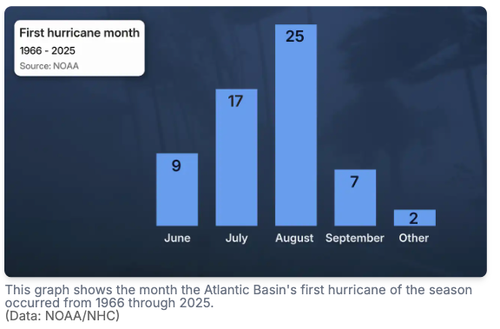
El Niño Delaying 2026 Atlantic Hurricane Season as Dolly Nears Florida
El Niño's wind shear suppresses 2026 Atlantic hurricane activity, delaying first hurricane as Tropical Storm Dolly's remnants approach Florida and the Caribbean.

Mumbai’s Vile Parle Cypher is giving unheard rappers a voice

Enrich and Ultimo impress

Karnataka CM Signals Review of 5% Park Land Amendment Bill in Assembly

