Tiny House Villages Rise as Fast‑Growing Cities Battle Homelessness Crisis
As Charlotte and other U.S. metros surge, tiny house villages offer community‑driven housing for the homeless. The movement quadrupled from 34 to 123 sites in five years.
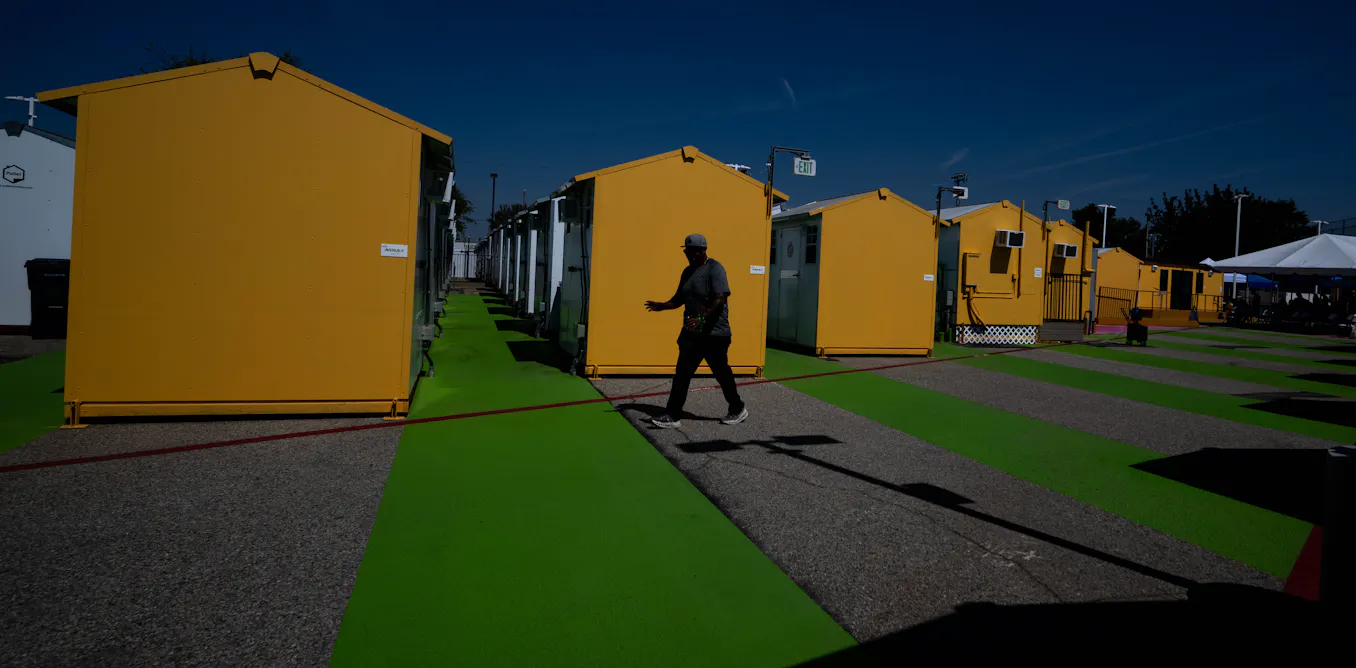
Charlotte, North Carolina, has become the fastest-growing large city in the United States, adding over 20,000 residents between 2024 and 2025 and nearing a population of 1 million. The city's rapid expansion has strained infrastructure and intensified its housing crisis. In 2026, Charlotte reported 2,018 people experiencing homelessness, a sharp increase from 444 in the previous year.
Urban researchers examining housing insecurity and development note that Charlotte's challenges mirror a broader national trend. As American cities grow, economic expansion and wealth concentration often coincide with persistent housing inequality. Many communities are turning to resident-led solutions, such as tiny house villages, to address the affordability gap.
Housing costs in Charlotte have surged, with median rent rising from $1,146 in 2019 to $1,627 in 2024. Longtime residents in historically Black neighborhoods face displacement due to redevelopment and rising property values. The Charlotte-Mecklenburg area now has about three extremely low-income households for every affordable rental unit, making it harder for vulnerable residents to stay housed. The share of people exiting homelessness for permanent housing dropped from 38% in 2020 to 25% in 2024.
Research highlights that cities often prioritize growth without ensuring equitable benefits. When traditional housing systems fail to support unhoused populations, community-driven alternatives emerge. Tiny house villages, for example, provide shelter and shared resources like bathrooms, kitchens, and healthcare. These villages vary in structure—some offer temporary housing, while others provide long-term solutions with pathways to permanent homes.
A 2024 study found the number of tiny house villages nationwide nearly quadrupled from 34 in 2019 to 123 in 2024. These models, often led by nonprofits and faith-based groups, adapt to local needs and operate outside conventional housing systems. In Portland, Oregon, Dignity Village exemplifies this approach. Starting as a tent city in 2000, it evolved into a self-governed community of tiny homes with about 60 residents. Residents contribute to operations through labor and fees, while the city provides the land.
Austin, Texas, has taken a different approach with Community First Village, a nonprofit offering permanent housing for people transitioning out of chronic homelessness. As of June 2026, it housed over 500 people, including nearly 50 "intentional neighbors" who live alongside residents. The model has attracted significant investment, including $35 million in federal pandemic-relief funds for a second site in Travis County.
Similar villages are emerging in Seattle, Los Angeles, and Springfield, Missouri, reflecting a nationwide shift in addressing homelessness. While many U.S. cities once focused on reversing population decline, today's fastest-growing metros—like Charlotte, Austin, and Phoenix—must balance growth with housing affordability and homelessness solutions.
#HomelessnessSolutions #CharlotteNC #TinyHouseVillages #UrbanDevelopment #AffordableHousing #DignityVillage #CommunityFirstVillage #HousingCrisis
Comments (0)
No comments yet — be the first to weigh in.

NASA Launches Nancy Grace Roman Telescope to Unlock Universe's Mysteries
NASA's new Nancy Grace Roman Space Telescope lifts off from Florida to study dark energy, exoplanets, and cosmic mysteries with unprecedented precision and scope.

Nature reserves spot rare species during heatwaves
Nature reserves in Hertfordshire and Middlesex have documented rare species this summer, with volunteers spotting wildlife not seen in decades and some even for...

Inmates at HMP La Moye craft boxes to save Jersey's hedgehogs
Prisoners at HMP La Moye have crafted nesting and feeding boxes to support Jersey's hedgehog population, boosting rehabilitation and community engagement.

2026 Nepal Flood: Ice‑Rock Avalanche, Glacial Lake Outburst and Climate‑Change Risks
A massive ice‑rock avalanche triggered a catastrophic flood in Nepal on Aug. 26 2026, followed by a glacial lake outburst that devastated towns and hydropower plants. Climate‑change‑driven thawing increased the risk.

Mumbai’s Vile Parle Cypher is giving unheard rappers a voice

Enrich and Ultimo impress

Karnataka CM Signals Review of 5% Park Land Amendment Bill in Assembly

