UK Faces 'Catastrophic' Cuts to Physics Research After Higgs Boson Breakthrough
UK's decision to cut funding for major physics projects, including the Large Hadron Collider upgrade, raises concerns about the future of blue-sky research and its impact on scientific innovation and economic growth.
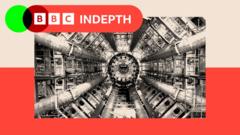
British physicists face potential setbacks as funding for fundamental research comes under threat, raising concerns about the future of groundbreaking scientific discovery in the UK. The issue has drawn attention following proposed cuts to the UK's contribution to major international research projects, including upgrades to the Large Hadron Collider at CERN. These cuts could significantly reduce the country's involvement in particle physics and astronomy, areas where the UK has historically excelled.
The debate over research priorities has intensified after the death in 2024 of Professor Peter Higgs, the British physicist who predicted the existence of the Higgs boson—a particle crucial to understanding the fabric of the universe. Higgs, who jointly won the 2013 Nobel Prize in Physics, had emphasized the importance of blue-sky research, which seeks to answer fundamental questions about the universe without immediate practical applications. His work, along with other foundational discoveries such as the electron, the structure of DNA, and early computing, has since underpinned technologies that have transformed industries and economies worldwide.
However, recent funding decisions have raised alarms among scientists. In February, the Science and Technology Facilities Council (STFC), part of the UK Research and Innovation Agency (UKRI), announced a "likely" 30% cut—amounting to £162 million—to its funding for particle physics and astronomy. This follows a broader reorganization of UKRI’s funding structure into three "buckets": one for blue-sky research, a second for government priorities such as artificial intelligence and quantum computing, and a third for business-led applied research aimed at economic growth.
Critics argue that the cuts reflect a shift in priorities away from curiosity-driven science toward applied research. Internal documents from the STFC suggest a deliberate move of funds from fundamental research to targeted programs. A senior scientist, speaking on condition of anonymity, stated that projects were adequately funded and that the cuts were not due to poor financial planning but rather a strategic reallocation of resources.
UKRI’s leadership, including its chief executive Professor Sir Ian Chapman, has denied these claims, asserting that blue-sky research remains protected and even growing in monetary terms. The government has also maintained that total funding for the STFC is not being reduced, pointing to a £38 billion investment in UKRI over the coming years, including £14.5 billion earmarked for curiosity-driven research.
Yet, transparency issues have fueled skepticism. Chi Onwurah, the Labour MP and chair of the House of Commons Science, Innovation and Technology Select Committee, has criticized the lack of detailed breakdowns of how funding is allocated. During a hearing, she expressed frustration that UKRI could not provide clear comparisons of blue-sky research spending before and after the reorganization, undermining confidence in the government’s assurances.
The impact of these cuts is already being felt. Dr. Simon Williams, a theoretical physicist at Durham University, warned that delaying grant decisions has left at least 30 young physicists without funding this year, risking a brain drain as researchers seek opportunities overseas. Williams, whose own work on quantum computing for particle behavior has indirect commercial applications, argues that cutting blue-sky research threatens not only scientific progress but also industries that rely on foundational discoveries.
The STFC has attributed the cuts to inflation, currency fluctuations, and an "overabundance of ambition" in initiating projects without sufficient funding. However, Williams and others suggest this narrative serves as a justification for a broader shift in priorities.
As the UK grapples with balancing economic growth and scientific discovery, the future of blue-sky research remains uncertain. While the government insists that curiosity-driven science is safeguarded, the lack of clear accounting and the scale of proposed cuts have left many in the scientific community deeply concerned about the long-term health of British physics.
Comments (0)
No comments yet — be the first to weigh in.

NASA Launches Nancy Grace Roman Telescope to Unlock Universe's Mysteries
NASA's new Nancy Grace Roman Space Telescope lifts off from Florida to study dark energy, exoplanets, and cosmic mysteries with unprecedented precision and scope.

Nature reserves spot rare species during heatwaves
Nature reserves in Hertfordshire and Middlesex have documented rare species this summer, with volunteers spotting wildlife not seen in decades and some even for...

Inmates at HMP La Moye craft boxes to save Jersey's hedgehogs
Prisoners at HMP La Moye have crafted nesting and feeding boxes to support Jersey's hedgehog population, boosting rehabilitation and community engagement.

2026 Nepal Flood: Ice‑Rock Avalanche, Glacial Lake Outburst and Climate‑Change Risks
A massive ice‑rock avalanche triggered a catastrophic flood in Nepal on Aug. 26 2026, followed by a glacial lake outburst that devastated towns and hydropower plants. Climate‑change‑driven thawing increased the risk.

Mumbai’s Vile Parle Cypher is giving unheard rappers a voice

Enrich and Ultimo impress

Karnataka CM Signals Review of 5% Park Land Amendment Bill in Assembly

