Unplanned resorts threaten St. Martin’s Island’s fragile ecosystem
Over 300 resorts now exist on Bangladesh’s only coral island, St. Martin’s, despite strict construction bans. Illegal developments clear Keya forests and damage beaches, threatening biodiversity.
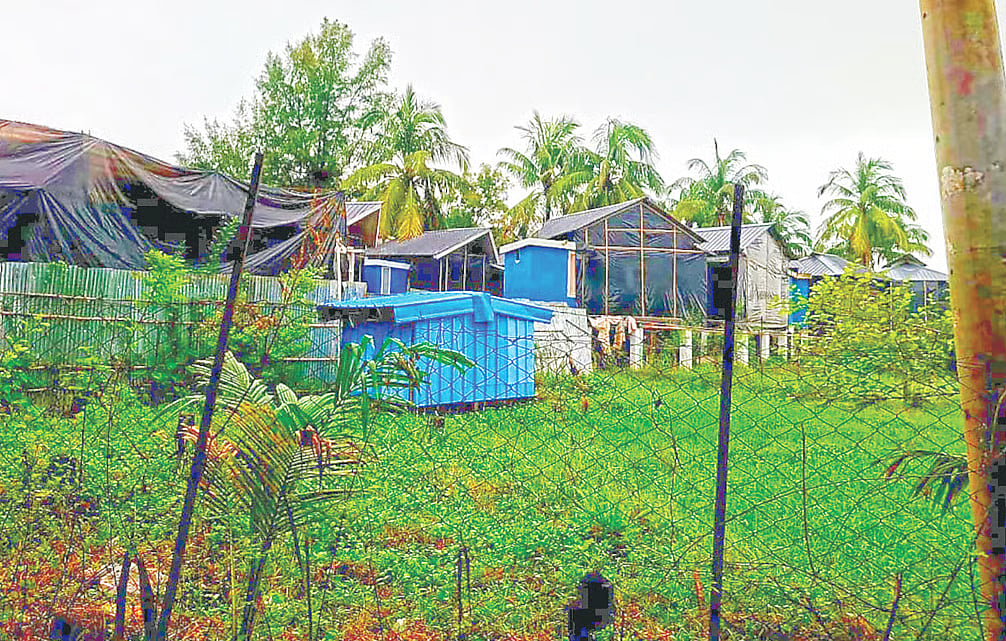
Illegal resort construction surges on Bangladesh’s Saint Martin’s Island despite environmental protections
New resorts and cottages are being built on Saint Martin’s Island, Bangladesh’s only coral island, despite a long-standing ban on construction and ongoing conservation efforts. Local residents and officials report that at least 12 new structures have appeared since the 13th parliamentary election, with developers clearing native Keya forests and coconut trees and extracting sand and limestone from the shoreline. The activity has intensified even as authorities attempt to protect the island’s fragile ecosystem.
According to the Department of Environment, more than 70 illegal resorts were constructed under the previous government. During the interim administration, enforcement actions such as fines and legal cases temporarily halted new construction. However, reports indicate that work has resumed, particularly during the off-season, when maritime links between Teknaf and the island are limited. As a result, illegal materials continue to reach the island despite restrictions on transporting bricks, sand, cement, and steel rods.
Saint Martin’s Island was declared an Ecologically Critical Area on April 19, 1999, banning all types of structural development. Yet over the past three decades, more than 230 hotels, resorts, and cottages have been built, with the total now expected to exceed 300 once current projects are completed. A Tk 89 million government project aims to restore biodiversity and mitigate climate impacts, but its success is uncertain amid ongoing illegal construction.
State Minister for Environment, Forest and Climate Change Sheikh Faridul Islam visited the island on August 8 and 9 and held meetings with local leaders and civil society representatives. He directed the Cox’s Bazar Development Authority, district administration, and Department of Environment to take strict action against unauthorized construction. Speaking to the press afterward, he emphasized that unplanned resorts threaten the island’s environment.
Investigations reveal that construction materials are being smuggled in despite controls. Locals allege that resort owners from outside Cox’s Bazar, including politically connected individuals, are behind the new developments. They claim that BNP-affiliated leaders and activists are involved in supervising construction, supplying labor, and transporting materials. Workers confirmed that sand is being collected directly from the beach and limestone from surrounding areas.
The island supports rich marine biodiversity, including coral reefs, marine turtles, and migratory birds. Once home to over 1,076 species, many have declined due to plastic pollution and unplanned development. A Department of Environment project seeks to restore Keya forests, which act as natural barriers against cyclones and tidal surges, and to protect habitats for corals, red crabs, and sea turtles. However, ongoing clearing of Keya forests for new resorts undermines these efforts.
Tourism to Saint Martin’s has dropped sharply after a 2024 government cap of 2,000 daily visitors during peak season. While this has eased some pressure on the environment, illegal construction continues. On August 9, officials observed new buildings under construction in Uttra Para, Dakkhin Para, Purba Para, Galachipa, and Konarpara. One resort, “Sandy Beach Resort,” was found under construction near the Marine Park office, with roof casting and cottage building ongoing.
In response to the surge in illegal construction, the Department of Environment has intensified monitoring. Despite these measures, enforcement remains challenging due to limited access during the monsoon and alleged political interference. Environmentalists warn that unless stricter action is taken, Saint Martin’s fragile ecosystem could suffer irreversible damage.
#SaintMartinsIsland #IllegalConstruction #EnvironmentalProtection #CoralIsland #BangladeshTourism #KeyaForest #BiodiversityLoss #Teknaf
Comments (0)
No comments yet — be the first to weigh in.

Mumbai’s Vile Parle Cypher is giving unheard rappers a voice
A new documentary streaming on YouTube sheds light on the Vile Parle Cypher, a grassroots hip-hop collective giving a platform to unheard street artists and gig...

Enrich and Ultimo impress
Racehorses Enrich and Ultimo Impress in Tuesday Morning Workouts at Bengaluru Turf Club BENGALURU, Sept 1 – Two rising stars in India’s horse racing circuit, En...

Karnataka CM Signals Review of 5% Park Land Amendment Bill in Assembly
Karnataka Chief Minister D.K. Shivakumar says the controversial 5% park land amendment bill can be re‑examined in the Assembly after protests over Lalbagh land use.

When an organisation deviates from its values, faith of those associated with its ideology is shattered: Kaushal Kishore
Former Union Minister and senior Bharatiya Janata Party (BJP) leader Kaushal Kishore suggested on September 1, 2026, that organizations risk losing public trust...
Mumbai’s Vile Parle Cypher is giving unheard rappers a voice
Enrich and Ultimo impress
Karnataka CM Signals Review of 5% Park Land Amendment Bill in Assembly
