US Secures 65 Billion Barrels of Venezuelan Oil in Historic Deal
The US has secured majority control of 65 billion barrels of Venezuelan oil in a landmark deal, aiming to double its reserves and boost investment while addressing energy security.
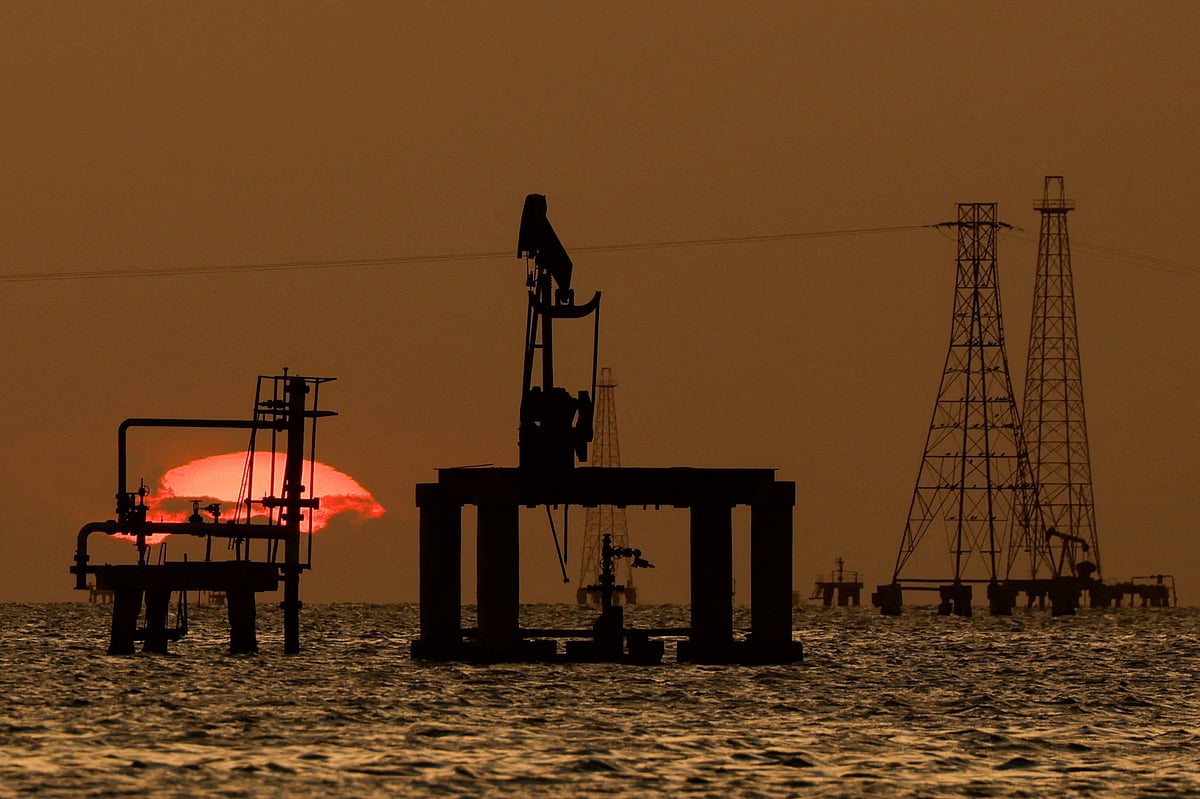
The Trump administration has finalized an unprecedented energy agreement with Venezuela that grants the United States majority control over 65 billion barrels of the South American nation’s proven oil reserves. The deal, announced Friday by President Donald Trump as “the biggest oil deal in world history,” is expected to attract nearly $100 billion in private investment to Venezuela’s struggling energy sector. U.S. and Venezuelan officials confirmed that the arrangement could inject more than $209 billion in tax revenue into Venezuela while significantly expanding U.S. oil reserves at a time when domestic supplies are critically low.
Venezuela holds the world’s largest proven oil reserves, totaling approximately 300 billion barrels. Since the U.S.-backed removal of longtime leader Nicolás Maduro in January, Venezuela has operated under intense pressure from Washington. Maduro was replaced by interim leader Delcy Rodríguez, who has aligned closely with U.S. policy. Rodríguez praised the agreement as a “historic” step toward national recovery, highlighting projections of over $100 billion in private investment and substantial tax revenue for the Venezuelan government.
According to reports, the deal was negotiated between Rodríguez and U.S. officials, including Secretary of State Marco Rubio and Defense Secretary Pete Hegseth, in collaboration with private business interests. Rubio framed the agreement as a strategic win under Trump’s “America First” foreign policy, emphasizing its potential to stabilize energy supplies in the Western Hemisphere, lower gasoline prices in the U.S., and create thousands of high-paying jobs in Venezuela.
Energy analysts, however, have raised concerns about the mechanics of the deal. Jorge Pinon, a senior researcher at the University of Texas at Austin’s Energy Institute, questioned how Venezuelan oil assets would be transferred to U.S. control. “We don’t know how the transfer would take place,” Pinon said. “Is it a sale? Is it a title transfer? Is it only transferred once the reserves are actually produced?” The lack of clarity has fueled skepticism among private investors, despite the Trump administration’s push for U.S. companies to engage in Venezuelan oil projects.
Reporting from Axios indicated that discussions had centered on a dozen productive oil fields totaling 90 billion barrels of proven reserves—about one-third of Venezuela’s total. Under the proposed structure, U.S.-backed private companies, including American firms, would develop these fields and return a portion of oil revenues to Venezuela. The deal is expected to more than double U.S. oil reserves, which have dwindled to a 40-year low in the Strategic Petroleum Reserve.
Geopolitical and economic challenges remain formidable. U.S. oil companies have historically been cautious about investing in Venezuela due to concerns over nationalization, regulatory instability, and security risks. Chevron, the only U.S. oil company still operating in Venezuela after Maduro’s ouster, has increased daily crude production to 280,000 barrels and plans to raise output by 50 percent by 2028. Still, energy analyst John Kilduff of Again Capital stressed that the primary obstacle remains “the safety and security of your investment.” He suggested that U.S. ownership or control of oil fields could help mitigate political risk, creating a more stable environment for American firms.
The agreement comes amid rising gasoline prices in the U.S., a key political concern for Trump as he faces declining approval ratings ahead of the November midterm elections. By securing greater control over Venezuelan oil, the administration aims to stabilize domestic fuel costs while advancing its broader energy security strategy.
#VenezuelaOilDeal #USVenezuelaEnergy #OilReserves #TrumpAdministration #DelcyRodriguez #Chevron #EnergySecurity #OilInvestment
Comments (0)
No comments yet — be the first to weigh in.

Mumbai’s Vile Parle Cypher is giving unheard rappers a voice
A new documentary streaming on YouTube sheds light on the Vile Parle Cypher, a grassroots hip-hop collective giving a platform to unheard street artists and gig...

Enrich and Ultimo impress
Racehorses Enrich and Ultimo Impress in Tuesday Morning Workouts at Bengaluru Turf Club BENGALURU, Sept 1 – Two rising stars in India’s horse racing circuit, En...

Karnataka CM Signals Review of 5% Park Land Amendment Bill in Assembly
Karnataka Chief Minister D.K. Shivakumar says the controversial 5% park land amendment bill can be re‑examined in the Assembly after protests over Lalbagh land use.

When an organisation deviates from its values, faith of those associated with its ideology is shattered: Kaushal Kishore
Former Union Minister and senior Bharatiya Janata Party (BJP) leader Kaushal Kishore suggested on September 1, 2026, that organizations risk losing public trust...
Mumbai’s Vile Parle Cypher is giving unheard rappers a voice
Enrich and Ultimo impress
Karnataka CM Signals Review of 5% Park Land Amendment Bill in Assembly
