US threatens severe sanctions on nations trading with Iran, China resistance looms
US launches 'Operation Economic Outcast' to isolate Iran, warning of sanctions on countries maintaining ties. China, Iran's top trading partner, resists pressure as Tehran vows retaliation.
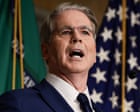
The United States has announced a new campaign to isolate Iran, threatening severe sanctions on any country or entity that maintains economic ties with Tehran. Treasury Secretary Scott Bessent, who introduced the initiative, called it “Operation Economic Outcast” and said the aim is to sever every financial lifeline that sustains the Iranian regime. The move comes after a series of failed diplomatic and military efforts to curb Iran’s nuclear program and to compel the country to halt its ballistic missile development.
Bessent compared the sanctions drive to the D‑Day Normandy landings, describing it as an “unprecedented” effort that would “cut every economic lifeline” supporting the regime. He said the United States has identified those that continue to deal with Iran and will give each violator a deadline to cut ties or face sanctions. “The clock just started ticking,” Bessent told reporters. He added that any entity that facilitates money laundering on behalf of Iran will be removed from the U.S. dollar system. The Treasury will target entities that help turn Iranian oil into money that supports repression.
When asked whether the campaign would extend to China, which imported roughly 80 % of Iran’s oil shipments last year, Bessent said, “We want to make clear here today that no one is above the reach of U.S. sanctions. If they facilitate transactions and are part of the ecosystem that turns Iranian oil into money, into repression, they will be targeted.” The Secretary did not confirm whether President Donald Trump would discuss the issue with Chinese President Xi Jinping, although he noted that the president has been “making phone calls to world leaders with specific requests to cease their interactions with the regime.”
China’s embassy in Washington said that sanctions and pressure do not help resolve the Iran issue. “China calls on the relevant parties to take responsible actions and resolve the issue through political and diplomatic means,” the embassy said. The statement came after the United Arab Emirates suspended trade ties with Iran and after Turkey, another key trading partner, has yet to respond to the U.S. threat.
Iran has warned it will retaliate against any country that participates in the isolation campaign. Maj. Gen. Ali Abdollahi, chief of staff of the armed forces, said retaliation could take the form of land, sea or air operations or cyber‑attacks. Tehran’s officials also threatened to close the Strait of Hormuz, a move that would disrupt global oil supplies, and have already attacked ships that ignored its declaration. In response, the United States imposed a counter‑blockage on Iranian oil exports through the strait, creating a standoff that has had a profound effect on the global economy.
The announcement of secondary sanctions follows nearly six months after the United States and Israel launched an attack that killed Iranian Supreme Leader Ali Khamenei. Early expectations that the regime would collapse or agree to Washington’s demands to abandon uranium enrichment have been dashed. Hardliners have strengthened their grip on the government, and the regime’s response to U.S. pressure has been to double down on its economic and military posture.
Sina Toossi, a senior non‑resident fellow at the Center for International Policy, said that Washington’s intensified economic strangulation is “trying to accomplish what military force has so far failed to achieve.” He added that Tehran is responding with its own zero‑sum approach. U.S. Defense Secretary Pete Hegseth said further military action was not off the table, noting that the United States could use kinetic strikes in the Strait of Hormuz or around Iran if necessary.
Andrew Miller, a senior fellow at the Center for American Progress, said the new sanctions signal that the war has brought the United States no closer to eliminating Iran’s nuclear program or crippling the Iranian regime. He cautioned that while sanctions can be effective, it is unlikely they will produce a quick settlement favorable to the United States.
The U.S. campaign, dubbed Operation Economic Outcast, is a clear escalation in the ongoing effort to isolate Iran. Its success will depend on the willingness of key trading partners to comply with U.S. demands and on the ability of the United States to enforce sanctions on a global scale. The next weeks will reveal whether the U.S. can compel countries like China to sever ties with Tehran or whether Iran will find new routes to sustain its economy.
Comments (0)
No comments yet — be the first to weigh in.
Iran-US Tensions Escalate Amid Hormuz Strait Crisis – Live Updates
Iranian President Pezeshkian seeks diplomatic solutions with global leaders at SCO summit in Kyrgyzstan amid rising US tensions over Hormuz Strait.

Search continues for 18 passengers after ferry capsized in northern Cyprus
Search and rescue operations are continuing off the coast of Kyrenia in northern Cyprus after a passenger ferry capsized and sank on Sunday, leaving at least ei...

Swiss Man Arrested After Deadly Rave Shooting Kills Italian Woman
A 43-year-old Swiss suspect has been arrested after a shooting at a techno rave in Aarau left one woman dead and several others injured. Authorities continue their investigation.

England attack's 2005 comparisons fair - Trescothick
England’s new pace attack is drawing comparisons to the legendary Ashes-winning quartet of 2005, according to interim head coach Marcus Trescothick. The current...

Mumbai’s Vile Parle Cypher is giving unheard rappers a voice

Enrich and Ultimo impress

Karnataka CM Signals Review of 5% Park Land Amendment Bill in Assembly

