USS Abraham Lincoln’s record deployment highlights shortfalls of US military readiness
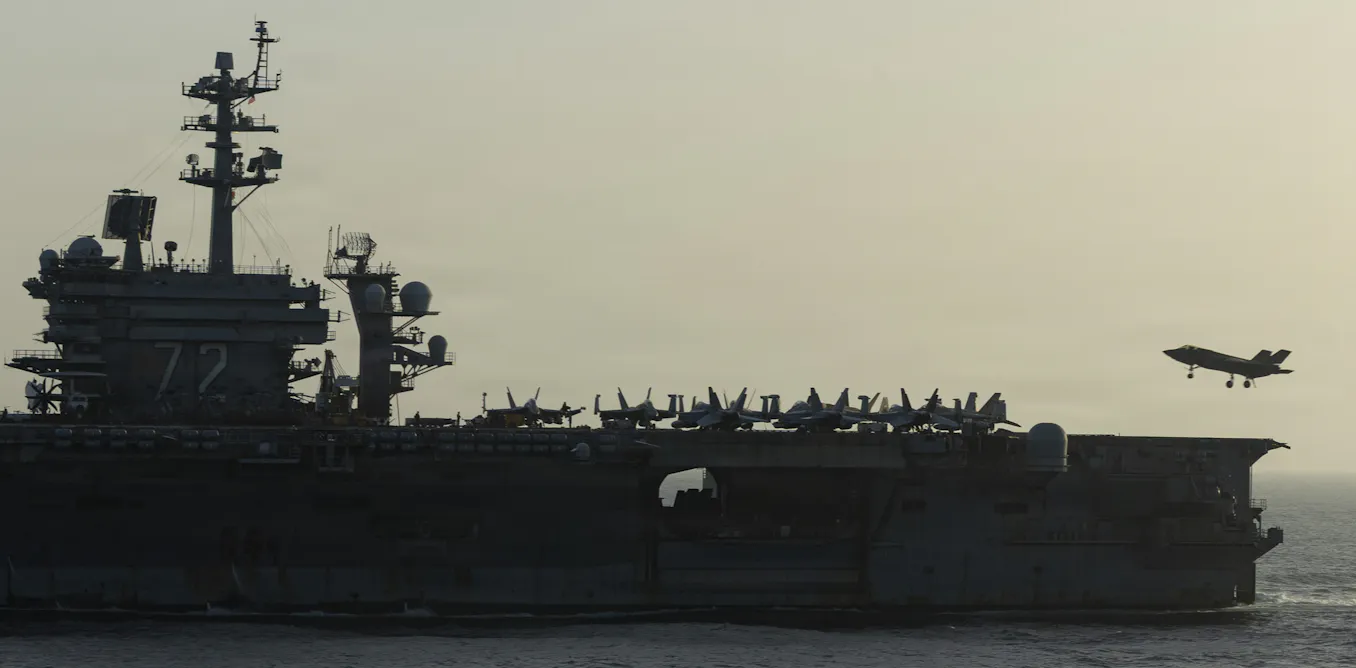
The U.S. Navy's USS Abraham Lincoln aircraft carrier recently completed a record 266-day deployment, with 200 days spent in a combat zone, highlighting ongoing concerns about military readiness amid sustained operational demands. The extended deployment, which ended in 2026, saw sailors and Marines facing prolonged mental strain and disrupted meal plans due to limited resupply opportunities, according to official Navy accounts.
The prolonged deployment underscores broader issues within the U.S. military's operational tempo, which has raised questions about long-term readiness and sustainability. In February 2026, the Trump administration launched a military conflict with Iran, a decision made despite warnings from military leaders about potential strategic and logistical challenges. These included the risk of a harder-line Iranian regime, potential disruptions to global oil shipping through the Strait of Hormuz, and shortages of precision-guided munitions.
The conflict began with a force already stretched thin by years of sustained military engagements. In May 2025, an Army sergeant major had warned that operational demands had surpassed those of the post-9/11 era, threatening soldier readiness, retention, and family stability. By June 2017, expired warfare readiness certifications for cruiser and destroyer crews in Japan had contributed to major incidents, including the collisions involving the USS Fitzgerald and USS John S. McCain, which resulted in 17 deaths.
Military experts note that the U.S. has maintained a high frequency of military interventions since the end of the Cold War, even as the strategic importance of some intervention locations has declined. Researchers have documented a steady increase in U.S. military interventions over the decades, with 1974 being the last year without a new intervention. This persistent operational load has prevented the military from resetting or rebuilding readiness reserves.
The crisis aboard the USS Abraham Lincoln reflects a broader pattern of borrowing military capacity to meet immediate demands. The carrier’s extended deployment forced the Navy to relocate the USS George Washington from Japan to the Middle East, leaving a gap in the western Pacific. While this move relieved the Lincoln, it created new vulnerabilities elsewhere, raising concerns about the sustainability of such decisions.
Analysts argue that the U.S. military’s challenges are not due to a lack of resources or personnel but rather a result of strategic choices by civilian leadership. The crew of the USS Abraham Lincoln fulfilled their duties without public complaint, placing the onus on decision-makers to justify the prolonged conflict and its impact on military readiness.
#MilitaryReadiness #USSAbrahamLincoln #USNavy #IranConflict #TrumpAdministration #MilitaryOverstretch #DefensePolicy
Comments (0)
No comments yet — be the first to weigh in.

NASA Launches Nancy Grace Roman Telescope to Unlock Universe's Mysteries
NASA's new Nancy Grace Roman Space Telescope lifts off from Florida to study dark energy, exoplanets, and cosmic mysteries with unprecedented precision and scope.

Nature reserves spot rare species during heatwaves
Nature reserves in Hertfordshire and Middlesex have documented rare species this summer, with volunteers spotting wildlife not seen in decades and some even for...

Inmates at HMP La Moye craft boxes to save Jersey's hedgehogs
Prisoners at HMP La Moye have crafted nesting and feeding boxes to support Jersey's hedgehog population, boosting rehabilitation and community engagement.

2026 Nepal Flood: Ice‑Rock Avalanche, Glacial Lake Outburst and Climate‑Change Risks
A massive ice‑rock avalanche triggered a catastrophic flood in Nepal on Aug. 26 2026, followed by a glacial lake outburst that devastated towns and hydropower plants. Climate‑change‑driven thawing increased the risk.

Mumbai’s Vile Parle Cypher is giving unheard rappers a voice

Enrich and Ultimo impress

Karnataka CM Signals Review of 5% Park Land Amendment Bill in Assembly

