Welcome To FAFOland
The Democratic Party and its allies in the federal judiciary are escalating efforts to challenge new federal rules aimed at standardizing mail-in ballot procedures ahead of the midterm elections. President Donald Trump issued Executive Order 14399 in March, directing the U.S. Postal Service (USPS) to establish uniform standards for mail-in ballots to prevent fraud. The order requires states to submit voter rolls to verify eligibility, but 24 states have filed lawsuits to block these measures, arguing they overstep federal authority.
The legal battle centers on whether the executive order, which seeks to create a trackable chain-of-custody for ballots, conflicts with existing state election laws. A federal judge in Massachusetts, Indira Talwani—a Democratic appointee—has alternately blocked and reinstated parts of the order, creating procedural confusion. The Supreme Court of the United States (SCOTUS) has already ruled that Judge Talwani made errors in her decisions, leaving the fate of the executive order uncertain. Legal experts suggest the case could return to SCOTUS, where the Purcell principle—a non-binding guideline discouraging last-minute election rule changes—may influence the outcome.
Congress has not acted quickly enough to pass the Safeguard American Voter Eligibility (SAVE) Act, which includes provisions such as voter ID and proof of citizenship requirements. With the Senate not scheduled to return until mid-September, the likelihood of the SAVE Act becoming law before the midterms remains low. If the executive order is not implemented, the president may consider issuing a National Security Executive Order to enforce stricter election procedures. Such an order would bypass federal court challenges due to existing national emergency declarations, including one issued in 2018 to combat foreign election interference, which remains in effect under President Joe Biden.
A National Security Executive Order could impose nationwide voter ID requirements, restrict absentee ballots, ban computerized tabulation machines, mandate same-day voting results, and even deploy federal agents at polling locations. Legal analysts argue this would trigger a constitutional crisis, as Democratic-led states would likely refuse to comply. The federal government could respond by invoking the Supremacy Clause of the U.S. Constitution, potentially leading to legal and political confrontations with state officials.
Meanwhile, financial pressure on left-leaning advocacy groups is increasing. Treasury Secretary Scott Bessent has reportedly considered revoking the tax-exempt status of organizations such as the Open Society Foundations, the Council on American-Islamic Relations (CAIR), and the Southern Poverty Law Center, which finance protest activities. Such a move could severely limit their ability to fund operations.
As tensions rise, the midterm elections loom as a potential turning point. Analysts suggest that if the administration implements stricter election controls, the Democratic Party could face severe setbacks. The outcome may hinge on whether the judicial system upholds the executive order or if the president escalates enforcement through national security measures.
#ElectionIntegrity #MailInBallots #ExecutiveOrder #VoterFraud #MidtermElections #NationalSecurity #SupremacyClause
Comments (0)
No comments yet — be the first to weigh in.

Free School Uniform Swap Shop Saves Welsh Families £50m Annually
A Cardiff father's school uniform swap shop initiative has grown to 200 schools, helping Welsh families save £50m yearly while promoting sustainability and reducing clothing waste.

Poland, US Explore Permanent Military Bases: Defense Talks Underway
Poland and the US are discussing permanent American military bases in Poland, focusing on defense capabilities rather than troop numbers. Nuclear warheads are not part of the plans.
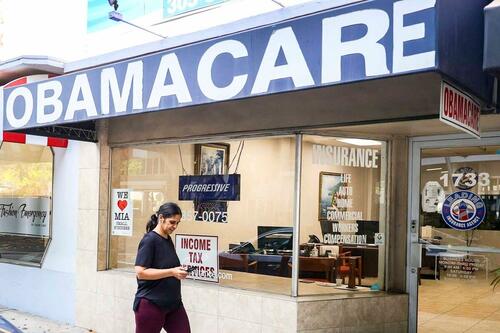
Taxpayers Lost $65B to Obamacare Fraud in 2024; Feds Crack Down
A Paragon Health Institute report reveals $65 billion in taxpayer losses due to Obamacare and Medicaid fraud in 2024, with improper enrollments rising in 2025.
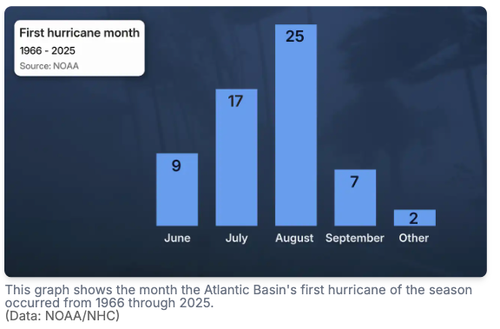
El Niño Delaying 2026 Atlantic Hurricane Season as Dolly Nears Florida
El Niño's wind shear suppresses 2026 Atlantic hurricane activity, delaying first hurricane as Tropical Storm Dolly's remnants approach Florida and the Caribbean.

Mumbai’s Vile Parle Cypher is giving unheard rappers a voice

Enrich and Ultimo impress

Karnataka CM Signals Review of 5% Park Land Amendment Bill in Assembly

