Yayoi Kusama, Japanese artist who became a global superstar, dies aged 97
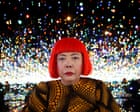
Yayoi Kusama, the Japanese artist known for her vibrant, hallucination-inspired works and global influence, has died at the age of 97. Her company, Yayoi Kusama Inc, confirmed her death in a Tokyo hospital on August 14 in a statement released Thursday.
Kusama’s career spanned over seven decades, during which she became one of the most recognizable figures in contemporary art. Her work included paintings, sculptures, installations, performance art, and literary contributions. The statement from her company described her as a "pioneering avant-garde artist" whose practice encompassed visual art, performance, fiction, and poetry. It noted that she continued painting until her final days, driven by themes of "forever love and eternal soul."
Born in Matsumoto, Japan, in 1929, Kusama endured a difficult childhood marked by an abusive mother and a philandering father. Her family owned plant nurseries, and she often drew flowers, despite her mother’s disapproval. As a child, Kusama began experiencing hallucinations, including visions of flowers speaking to her—a phenomenon that later became a central theme in her art.
During World War II, at age 13, she was conscripted to sew fabric for Japanese military parachutes. After studying traditional Japanese painting (nihonga) in Kyoto, she grew dissatisfied with its constraints and moved to New York in 1958. There, she connected with artists like Donald Judd and gained recognition for her "infinity net" paintings—large canvases covered in repetitive polka dots. In 1962, she sold one of these works to Judd and Frank Stella for $75. Decades later, in 2014, her painting *White No. 28* sold at auction for $7.1 million, setting a record for a living female artist at the time.
Kusama’s work often explored themes of infinity and "self-obliteration," inspired by her hallucinations. In 1963, she began creating "soft sculptures," covering objects with fabric phalluses as a way to confront her discomfort with sexuality, which she had been taught to view as shameful. Despite her contributions to pop art and minimalism, she felt overlooked by the art establishment, alleging that her ideas were appropriated by male artists like Andy Warhol.
Her 1966 Venice Biennale installation, *Narcissus Garden*, featured 1,500 reflective spheres arranged to create an infinite mirrored effect. When she began selling the balls for $2 each, officials intervened to stop the sale. Throughout the 1960s and 1970s, Kusama staged provocative performances, including New York’s first "homosexual wedding" and protests against the Vietnam War and Soviet policies.
After returning to Japan in the 1970s, Kusama voluntarily admitted herself to a psychiatric hospital in Tokyo, where she lived for the rest of her life. The hospital provided stability, allowing her to work in a nearby studio daily. Though her career faded in the 1980s and early 1990s, she regained prominence in 1993 with a mirrored pumpkin installation at the Venice Biennale. Pumpkins, which she first encountered in a hallucinatory episode as a child, became a recurring motif in her later works.
Kusama’s "Infinity Mirror Rooms," immersive installations featuring mirrored walls and LED lights, became cultural phenomena in the 21st century. Exhibitions of her work drew record-breaking crowds, including a 2017 show at Washington D.C.’s Hirshhorn Museum, which temporarily closed after a visitor damaged an artwork while attempting to take a selfie. Major retrospectives at New York’s Museum of Modern Art (1998), London’s Tate Modern (2012), and the Hirshhorn (2017) solidified her legacy.
Despite her global fame, Kusama maintained an outsider perspective, once stating she had no concern for how history would classify her. Her company’s statement affirmed her commitment to art as a source of hope, pledging to continue her legacy by bringing "strength for the future to people around the world."
Comments (0)
No comments yet — be the first to weigh in.

Iran-US Tensions Escalate Amid Hormuz Strait Crisis – Live Updates
Iranian President Pezeshkian seeks diplomatic solutions with global leaders at SCO summit in Kyrgyzstan amid rising US tensions over Hormuz Strait.

Search continues for 18 passengers after ferry capsized in northern Cyprus
Search and rescue operations are continuing off the coast of Kyrenia in northern Cyprus after a passenger ferry capsized and sank on Sunday, leaving at least ei...

Swiss Man Arrested After Deadly Rave Shooting Kills Italian Woman
A 43-year-old Swiss suspect has been arrested after a shooting at a techno rave in Aarau left one woman dead and several others injured. Authorities continue their investigation.

England attack's 2005 comparisons fair - Trescothick
England’s new pace attack is drawing comparisons to the legendary Ashes-winning quartet of 2005, according to interim head coach Marcus Trescothick. The current...

Mumbai’s Vile Parle Cypher is giving unheard rappers a voice

Enrich and Ultimo impress

Karnataka CM Signals Review of 5% Park Land Amendment Bill in Assembly

