Canada Should Reject Trump's Tariffs: Embrace Unilateral Free Trade
Economists argue retaliatory tariffs harm Canadian businesses and consumers more than U.S. targets. Advocates urge Ottawa to unilaterally slash trade barriers instead.
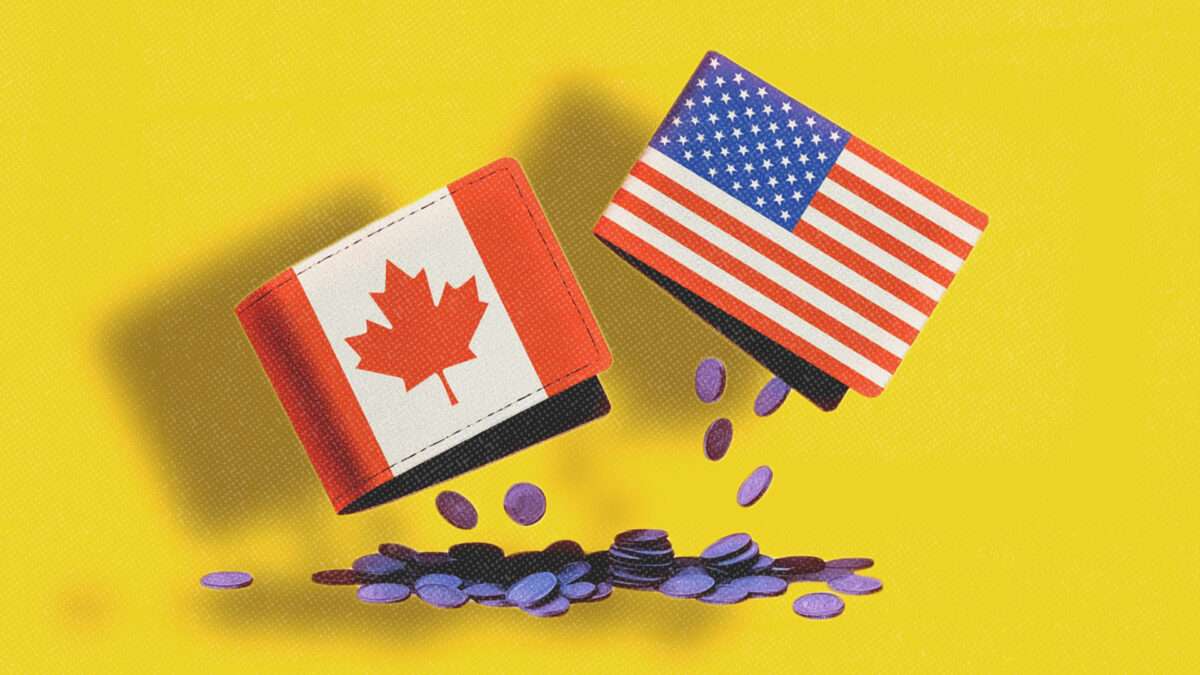
Canada should not engage in retaliatory tariffs against the United States, as such measures ultimately harm Canadian businesses and consumers while doing little to deter U.S. protectionism, according to economists.
Trade negotiations between the two countries broke down over the weekend, prompting the White House to announce plans to impose a 50 percent tariff on approximately $28 billion worth of Canadian goods. In response, the Canadian government vowed to impose matching tariffs on American products, with rates ranging from 15 to 50 percent.
Economists argue that tariffs are largely paid by businesses and consumers in the countries that impose them. When the U.S. imposes tariffs on imports, American companies directly pay import taxes to the government. These costs are often passed on to consumers in the form of higher prices or absorbed by foreign businesses through lower prices.
In the U.S., small businesses have particularly struggled with higher tariffs in 2025, according to a report from the Federal Reserve Bank of New York. Most have responded by raising prices for their customers. The same principle applies in Canada: retaliatory tariffs imposed by the Canadian government would mainly harm its own people.
"Think about what retaliation actually means," says Vincent Geloso, an economics professor at George Mason University. "Trump imposes a tax on Americans who buy Canadian goods. So our response is supposed to be…imposing a tax on Canadians who buy American goods? How exactly does making Canadians poorer punish Donald Trump?"
Jock Finlayson and Steven Globerman of Canada's Fraser Institute agree, noting that retaliation will lead to higher costs for Canadian firms and consumers, strain integrated North American supply chains, and slow economic growth.
Some argue that retaliation is necessary to get the U.S. to back down. However, economists remain unconvinced that this approach will prove effective.
"Retaliatory tariffs will increase the cost of living for Canadian households but are unlikely to weaken Trump's tariff fixation," caution Finlayson and Globerman. "Indeed, the Trump administration may respond to any incremental Canadian 'retaliation' by announcing additional market access restrictions targeting various Canadian industries."
Ryan Young, a senior economist at the Competitive Enterprise Institute, adds, "Canadian Prime Minister Carney's retaliatory tariffs come from understandable feelings of frustration and betrayal but will not change Trump's behavior."
Geloso notes that Canada has attempted countering American protectionism in the past with retaliatory tariffs that did more harm than good. In the 1930s, Canada's response to the Smoot-Hawley Tariff Act deepened the Depression in Canada. Additionally, imposing protectionist measures can create an environment where companies expect and demand special favors, leading to higher costs, less competitiveness, and even collusion between firms.
Instead, Geloso advises that Canada should unilaterally slash its own tariffs and trade barriers. Free trade does not require reciprocation from other countries, and historically, much trade liberalization has been unilateral.
This approach is not new. Decades ago, economist Milton Friedman advised Americans concerned about Japan's closed markets to unilaterally move toward free trade.
"We only increase the hurt to us—and also to them—by imposing additional restrictions in our turn," Friedman wrote. "The wise course for us is precisely the opposite—to move unilaterally toward free trade. If they still choose to impose restrictions, that is too bad but at least we have not added insult to injury."
While it may be emotionally and politically satisfying to push back against U.S. bullying, countering self-inflicted harm with more self-inflicted harm is not a viable strategy. Canadian retaliation is unlikely to end well for the country.
Comments (0)
No comments yet — be the first to weigh in.

Middlesbrough's Crime Crisis: Decades of Failed Policies Unleash Chaos
Former Middlesbrough mayor Andy Preston blames decades of lenient crime policies for the town's recent surge in gang violence and lawlessness.

Google Maps Renames Lake Ontario to 'Lake America' Following Trump Order
Google Maps now displays 'Lake America' in the US, replacing 'Lake Ontario' after Trump's executive order amid trade tensions with Canada. Canadians still see the original name.

Pentagon Warns Pentagon Chiefs: Iran War Unsustainable, Threatens U.S. Readiness
Classified assessment reveals Pentagon chiefs warn Defense Secretary Pete Hegseth that the Iran war is unsustainable and drains U.S. military resources and readiness.

Mike Rogers Proposes $50 Copays for Routine Health Screenings, Critics Warn of Risks
Former Congressman Mike Rogers suggests $50 copays for routine screenings, sparking debate over healthcare costs and access. Critics highlight potential risks.

Mumbai’s Vile Parle Cypher is giving unheard rappers a voice

Enrich and Ultimo impress

Karnataka CM Signals Review of 5% Park Land Amendment Bill in Assembly

