Netanyahu is right about one thing – the Oslo Accords led Israel to October 7

Israeli Prime Minister Benjamin Netanyahu has argued that the Oslo Accords contributed to the security failures on October 7, 2023, a claim that has sparked renewed debate about the legacy of the 1990s peace process. The accords, signed in 1993 and 1995, established a framework for Palestinian self-rule in parts of the West Bank and Gaza Strip, aiming to resolve the Israeli-Palestinian conflict through negotiation. Critics of the agreements, including Netanyahu, contend that they weakened Israel’s security posture by granting concessions without achieving lasting peace. Meanwhile, supporters of the Oslo process maintain that it laid essential groundwork for future negotiations, despite its shortcomings.
Netanyahu’s remarks reflect a long-standing skepticism toward the accords, which he has frequently criticized during his political career. As prime minister in the late 1990s, he opposed the agreements, arguing that they emboldened Palestinian militant groups like Hamas. The October 7 attacks, carried out by Hamas militants from Gaza, resulted in over 1,200 Israeli deaths and triggered a devastating Israeli military response in Gaza. Netanyahu has since framed the attacks as a direct consequence of the security vacuum created by Oslo, a perspective echoed by some conservative analysts and policymakers in Israel.
The Oslo Accords were brokered by the United States with support from the Palestine Liberation Organization (PLO), led at the time by Yasser Arafat. The agreements created the Palestinian Authority (PA), which governs parts of the West Bank today. However, the process stalled amid violence, including the Second Intifada in the early 2000s, and Hamas’s takeover of Gaza in 2007. Critics argue that the PA’s failure to prevent militant activity from Gaza undermined the accords’ security provisions, while others blame Israel’s continued settlement expansion in the West Bank for derailing negotiations.
Security experts and historians remain divided over the accords’ impact. Some point to structural flaws, such as the lack of a final status agreement on borders, Jerusalem, and refugees. Others highlight the geopolitical shifts since the 1990s, including the rise of Iran-backed militant groups and the collapse of multiple peace initiatives. The Israeli government has increasingly framed October 7 as evidence of the Oslo Accords’ failure, using the tragedy to justify its hardline policies toward Hamas and the PA.
Polls indicate that a majority of Israelis hold a negative view of the accords today, reflecting broader disillusionment with the peace process. However, international observers caution against simplistic attributions of blame, noting that the accords were intended as a first step rather than a comprehensive solution. The debate over Oslo’s legacy continues to shape discussions on Israeli security, Palestinian statehood, and the prospects for renewed negotiations.
#BenjaminNetanyahu #OsloAccords #IsraelHamasWar #October7Attacks #PalestinianAuthority #GazaStrip #WestBank #PeaceProcess
Comments (0)
No comments yet — be the first to weigh in.

Israel's 2.6M Students Return to School Amid Education Reforms and Protests
Israel's 2.6 million students resume classes as the Education Ministry introduces financial literacy and AI reforms, amid teacher shortages and protests over militarization.

Earth's magnetic field can help archaeologists sniff out forged antiquities
Researchers at the University of California San Diego have developed a new method using Earth's magnetic field to help archaeologists distinguish between a...

US, Israel, and Palestine to Hold Three Elections in 32 Days – Global Stakes
Three key elections – U.S., Israel, and Palestine – will take place from Oct. 27 to Nov. 28, shaping domestic politics and international ties.
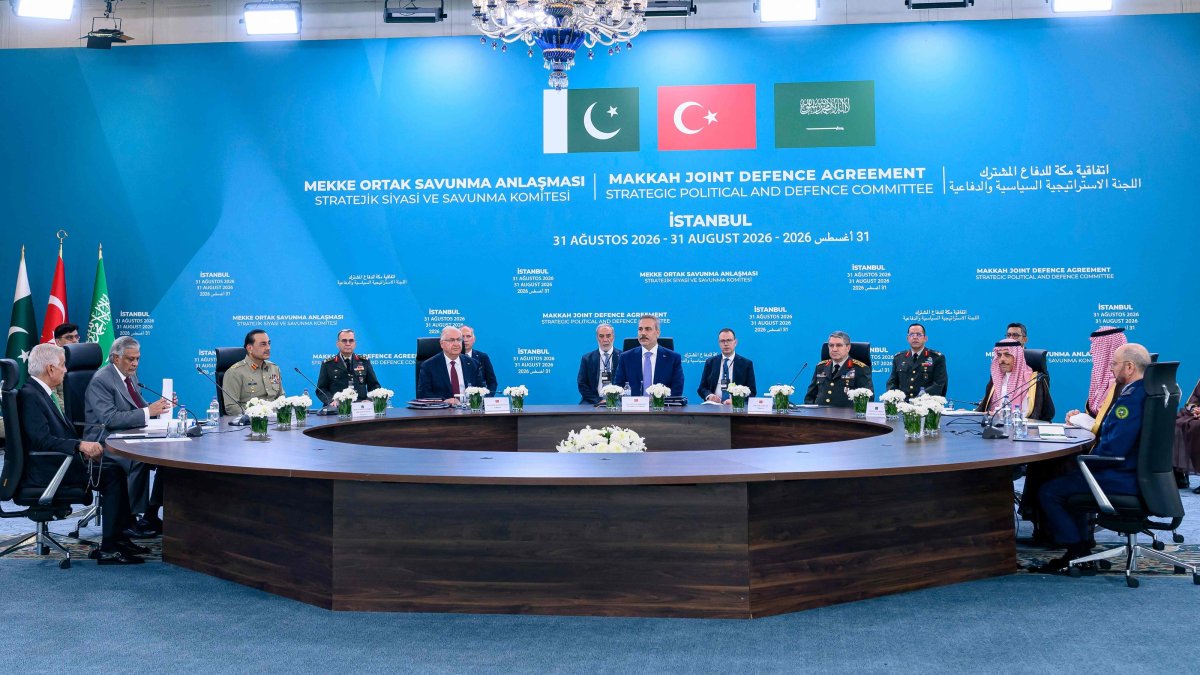
Türkiye, Pakistan, Saudi Arabia deepen joint defense framework
Türkiye, Pakistan and Saudi Arabia have agreed to deepen their defense partnership under the Mecca Agreement, taking new steps to strengthen collective deterren...

Mumbai’s Vile Parle Cypher is giving unheard rappers a voice

Enrich and Ultimo impress

Karnataka CM Signals Review of 5% Park Land Amendment Bill in Assembly

