Radical Plan Proposed to Restore Affordable Higher Education in US
A new proposal suggests direct federal subsidies to stabilize college affordability and accountability, replacing unreliable state funding and complex loan systems.
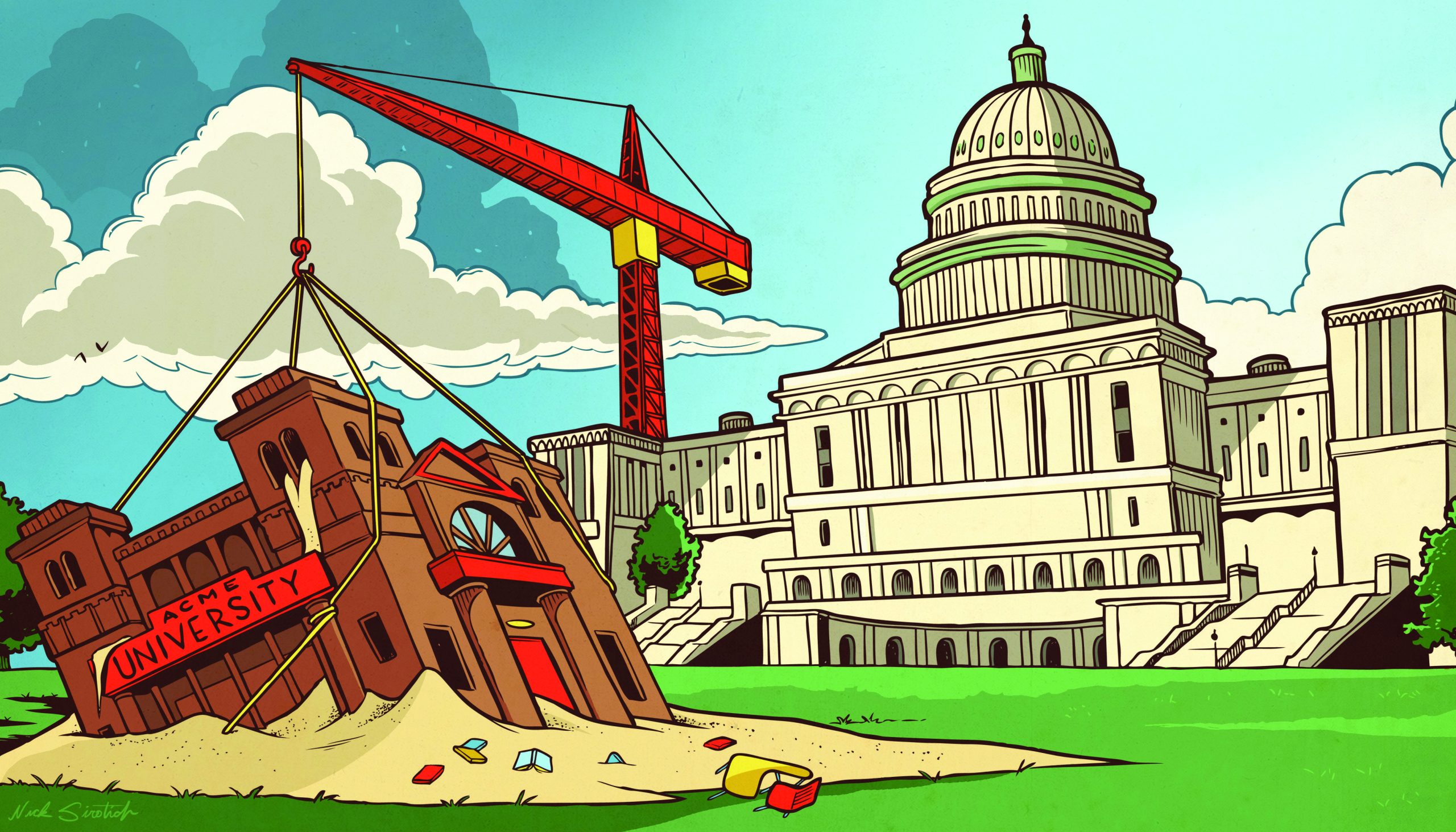
Affordable Higher Education Remains Elusive as System Faces Mounting Challenges
The promise of affordable higher education in the United States has largely gone unfulfilled, as successive generations have struggled with rising tuition and ballooning student debt. A new plan proposed by the Washington Monthly aims to address these longstanding issues by implementing a straightforward, voluntary federal subsidy program to stabilize funding for colleges and universities nationwide.
The current higher education system relies heavily on state funding and tuition revenue, supplemented by federal grants and loans totaling over $150 billion annually. However, state support has proven unreliable, often being cut during budget constraints, while federal aid lacks accountability for educational outcomes or cost control. This has led to a system where colleges can set tuition rates with little oversight, leaving students and families to bear the financial burden.
The proposed solution involves Congress offering a fixed federal subsidy—estimated at $10,000 per student—to any accredited college, public or private nonprofit, that agrees to maintain transparent pricing and affordability. Participation would be voluntary, allowing institutions to opt in or out while retaining autonomy over governance, curriculum, and admissions. The plan draws inspiration from successful mid-20th-century models that helped build the American middle class but adapts to modern realities, including the diverse ecosystem of private colleges that serve many working- and middle-class students.
Critics of universal free college proposals argue that fully subsidizing public institutions would disproportionately benefit states that have underfunded higher education while penalizing those that have maintained affordable tuition. The proposed plan avoids this pitfall by providing a uniform subsidy that colleges can supplement with their own revenue streams, such as state funding or private donations. Elite public universities with high out-of-state tuition—particularly those in major athletic conferences—would likely opt out, as the subsidy would not cover their revenue needs. This voluntary approach also mitigates political resistance by allowing states to maintain local control over their public systems.
The plan’s simplicity contrasts with past legislative efforts, such as President Biden’s proposed free community college initiative, which failed to gain sufficient Senate support, or his later attempt at broad student loan forgiveness, which was struck down by the Supreme Court. Unlike those efforts, this proposal avoids top-down mandates, instead incentivizing participation through federal funding while preserving institutional independence.
Beyond stabilizing college finances, the plan acknowledges the ongoing burden of student debt for borrowers who were failed by past policy failures. While not addressing debt cancellation directly, the proposal seeks to prevent future generations from facing similar difficulties by ensuring more affordable and accountable higher education.
Advocates argue that this approach could restore the U.S. higher education system to a foundation of shared purpose and public support, mirroring the post-World War II era when public investment in colleges helped drive economic mobility. With the next presidential election on the horizon, policymakers may find this model a practical alternative to the fragmented and often contentious debates over college affordability that have dominated recent years.
Comments (0)
No comments yet — be the first to weigh in.

Middlesbrough's Crime Crisis: Decades of Failed Policies Unleash Chaos
Former Middlesbrough mayor Andy Preston blames decades of lenient crime policies for the town's recent surge in gang violence and lawlessness.

Google Maps Renames Lake Ontario to 'Lake America' Following Trump Order
Google Maps now displays 'Lake America' in the US, replacing 'Lake Ontario' after Trump's executive order amid trade tensions with Canada. Canadians still see the original name.

Pentagon Warns Pentagon Chiefs: Iran War Unsustainable, Threatens U.S. Readiness
Classified assessment reveals Pentagon chiefs warn Defense Secretary Pete Hegseth that the Iran war is unsustainable and drains U.S. military resources and readiness.

Mike Rogers Proposes $50 Copays for Routine Health Screenings, Critics Warn of Risks
Former Congressman Mike Rogers suggests $50 copays for routine screenings, sparking debate over healthcare costs and access. Critics highlight potential risks.

Mumbai’s Vile Parle Cypher is giving unheard rappers a voice

Enrich and Ultimo impress

Karnataka CM Signals Review of 5% Park Land Amendment Bill in Assembly

