Refugees International Slams Israel's Gaza Food Claims as 'Absurd'
Jeremy Konyndyk of Refugees International criticizes Israel's claim that improved Gaza malnutrition stats invalidate famine declarations, citing aid blockades and limited food access.

Jeremy Konyndyk, the president of human rights advocacy group Refugees International, has rejected recent assertions by the Israeli government that improved malnutrition statistics in Gaza disprove the severity of the famine declared in the region a year ago. In statements published on social media platform X, Konyndyk characterized Israel's position as absurd on its face, emphasizing that any recent drop in starvation rates is the direct result of Israel easing its prolonged aid restrictions following international pressure and official famine determinations.
Addressing the shift in Gaza's public health metrics, Konyndyk explained that malnutrition and starvation have abated primarily because food aid was finally allowed to enter the territory after months of severe blockades. He noted that Israel obstructed humanitarian aid for more than six months prior to the formal famine declaration, only loosening its grip on international food distribution once the crisis reached a catastrophic threshold.
To illustrate the flaw in the Israeli government's reasoning, Konyndyk drew a direct comparison to physical harm. He wrote that if you hold someone's head underwater, they start to drown, and letting them up for air does not somehow mean you had not been drowning them. He added that the same logic applies to Israel's obstruction of food aid, stating that the famine stopped because Israel stopped doing the thing that was causing it.
The humanitarian timeline in Gaza reveals a prolonged period of severe restriction on essential goods. Between March 2 and May 19, 2025, Israeli authorities permitted no humanitarian aid to cross into the Gaza Strip, cutting off critical supplies of food, clean water, and medicine to the civilian population. Following that period, aid flows remained negligible for several months, failing to meet the basic daily survival needs of Gaza residents.
The situation reached a critical point in late August 2025, when international authorities officially declared a famine in Gaza. The formal declaration intensified global diplomatic efforts to alleviate the humanitarian crisis. In September 2025, a Trump-brokered agreement was finalized, which subsequently unlocked food aid and allowed humanitarian agencies to resume large-scale relief operations across the territory.
According to Refugees International, the subsequent decrease in acute malnutrition demonstrates the effectiveness of delivering food at scale rather than disproving the initial famine. Humanitarian organizations maintain that tracking starvation trends requires evaluating the specific political and military decisions that control supply lines, emphasizing that temporary relief measures do not erase the historical impact of prolonged aid blockades on the civilian population.
#Gaza #Israel #RefugeesInternational #JeremyKonyndyk #HumanitarianAid #Famine #MiddleEast #DonaldTrump
Comments (0)
No comments yet — be the first to weigh in.

Israel's 2.6M Students Return to School Amid Education Reforms and Protests
Israel's 2.6 million students resume classes as the Education Ministry introduces financial literacy and AI reforms, amid teacher shortages and protests over militarization.

Earth's magnetic field can help archaeologists sniff out forged antiquities
Researchers at the University of California San Diego have developed a new method using Earth's magnetic field to help archaeologists distinguish between a...

US, Israel, and Palestine to Hold Three Elections in 32 Days – Global Stakes
Three key elections – U.S., Israel, and Palestine – will take place from Oct. 27 to Nov. 28, shaping domestic politics and international ties.
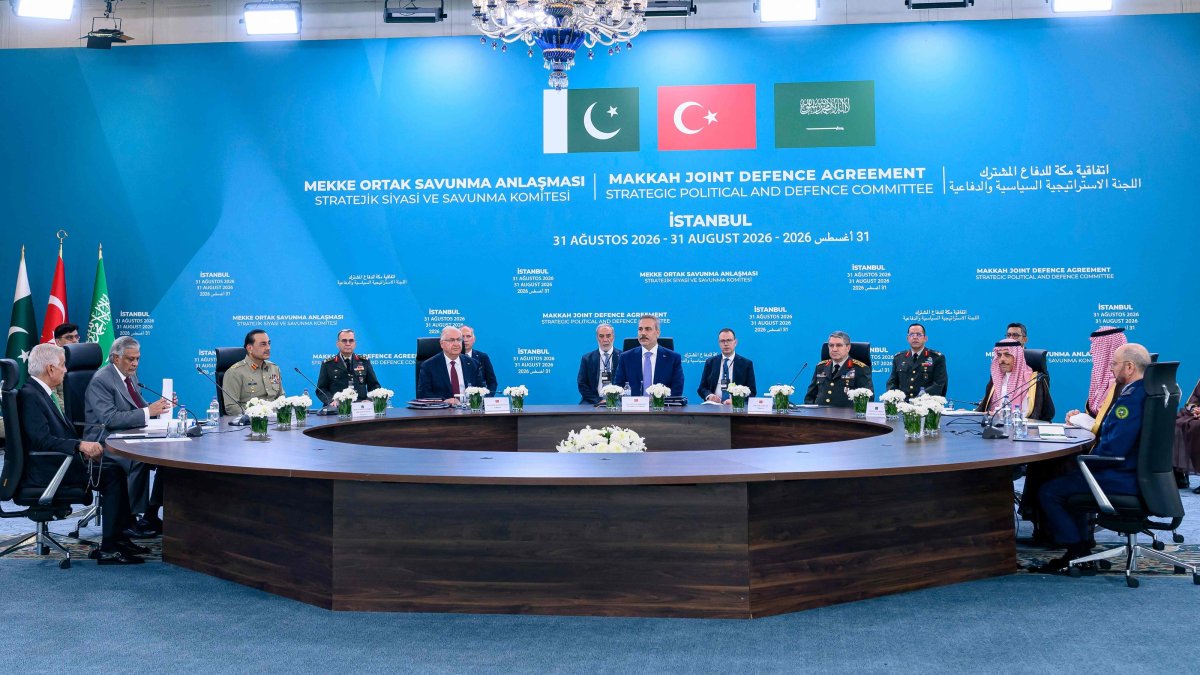
Türkiye, Pakistan, Saudi Arabia deepen joint defense framework
Türkiye, Pakistan and Saudi Arabia have agreed to deepen their defense partnership under the Mecca Agreement, taking new steps to strengthen collective deterren...

Mumbai’s Vile Parle Cypher is giving unheard rappers a voice

Enrich and Ultimo impress

Karnataka CM Signals Review of 5% Park Land Amendment Bill in Assembly

