Trump's New Iran Sanctions: Will They Topple the Regime or Backfire?
US Treasury Secretary Scott Bessent announces expanded sanctions on Iran, but Tehran remains defiant, betting on economic resilience and US political shifts to counter the pressure.

The United States has escalated its economic pressure campaign against Iran, with Treasury Secretary Scott Bessent announcing new sanctions targeting Tehran's financial networks worldwide. The measures, which include restrictions on digital assets, technology, gold, aviation and shipping, aim to isolate any country still engaging economically with Iran. Bessent described the move as an "economic D-Day," though Iranian leaders have dismissed the announcement as familiar rhetoric, insisting the country is prepared for all scenarios.
Iran's Economy Minister Ali Madanizadeh called the sanctions "the same old talk" and suggested Tehran had anticipated such steps. The question now facing Iranian officials is what additional measures Washington can impose that haven't already been tried, given decades of U.S. sanctions against Iran. While Bessent threatened secondary sanctions against entities continuing to do business with Tehran, the policy itself is not new. What remains to be seen is whether the U.S. can enforce these sanctions more effectively than before.
Previous sanctions have already weakened Iran's economy, reducing its ability to export oil by sea and complicating imports of goods and equipment. Iran has long relied on land routes with seven neighboring countries to bypass restrictions, but these cannot fully compensate for lost maritime trade, particularly in oil. The success of the new measures may hinge on whether Washington can close loopholes that persisted under earlier sanctions, especially those involving China and regional partners. China's foreign ministry has already stated its opposition to the sanctions, calling them illegal.
The economic strain is already taking a toll on ordinary Iranians. The Iranian rial has weakened significantly, making imports more expensive and eroding savings. Many families have drastically cut spending, with some relying on government subsidies just to afford basic goods like meat. Negin, a 34-year-old woman earning around $100 a month, described cutting out non-essential expenses entirely. Mona, a mother of two whose husband lost his job due to the war, said her family is struggling to manage after he stopped working on ships.
The timing of the sanctions adds another layer of complexity. Iran may be betting that economic disruption, particularly in the Strait of Hormuz, could drive up global oil prices and fuel inflation ahead of the U.S. midterm elections in November, potentially pressuring President Donald Trump politically. However, this is a gamble, as Iran's economy continues to deteriorate with each passing month of reduced oil exports and trade disruptions.
Iranian leaders face a difficult choice: making concessions now could be seen as surrender, while waiting risks negotiating from a position of greater weakness. The outcome may depend on whether countries like China and regional partners continue trading with Iran despite the sanctions. If they do, hardliners in Tehran may argue that Washington's strategy is ineffective, reinforcing resistance. If they retreat, the economic pressure could force a recalculation in Tehran.
Much now rests on global reactions to the new sanctions and whether they succeed in tightening Iran's financial isolation.
#IranSanctions #USIranPolicy #ScottBessent #IranEconomy #DonaldTrump #MiddleEastTensions
Comments (0)
No comments yet — be the first to weigh in.

Israel's 2.6M Students Return to School Amid Education Reforms and Protests
Israel's 2.6 million students resume classes as the Education Ministry introduces financial literacy and AI reforms, amid teacher shortages and protests over militarization.

Earth's magnetic field can help archaeologists sniff out forged antiquities
Researchers at the University of California San Diego have developed a new method using Earth's magnetic field to help archaeologists distinguish between a...

US, Israel, and Palestine to Hold Three Elections in 32 Days – Global Stakes
Three key elections – U.S., Israel, and Palestine – will take place from Oct. 27 to Nov. 28, shaping domestic politics and international ties.
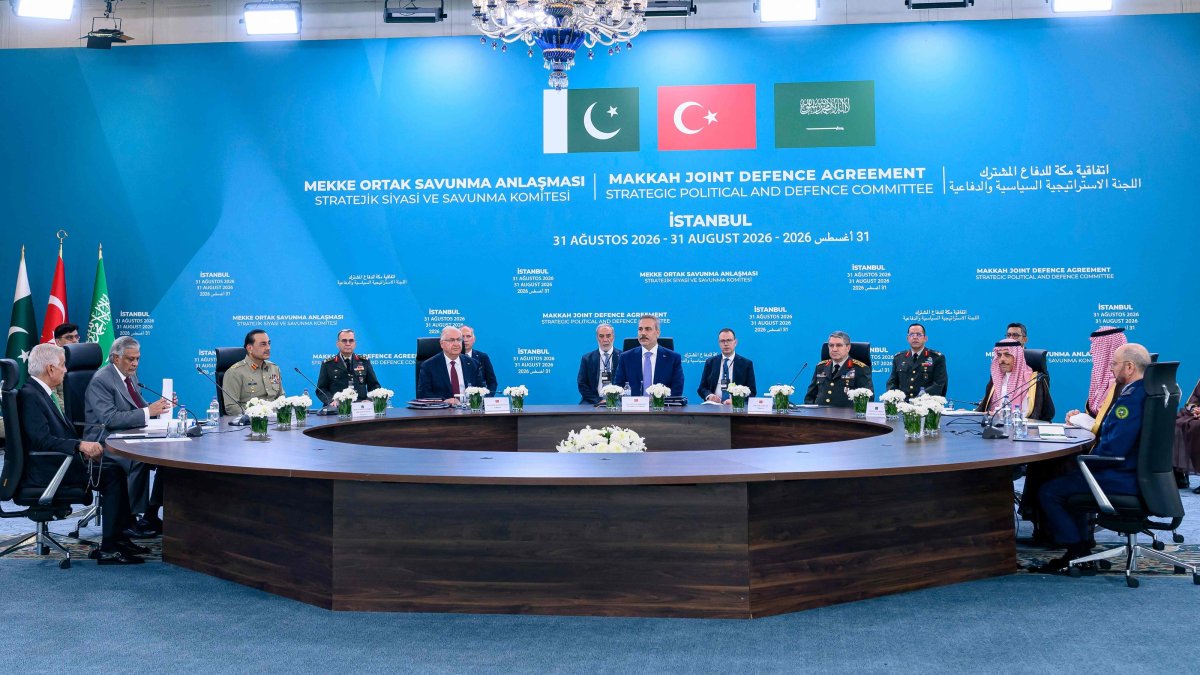
Türkiye, Pakistan, Saudi Arabia deepen joint defense framework
Türkiye, Pakistan and Saudi Arabia have agreed to deepen their defense partnership under the Mecca Agreement, taking new steps to strengthen collective deterren...

Mumbai’s Vile Parle Cypher is giving unheard rappers a voice

Enrich and Ultimo impress

Karnataka CM Signals Review of 5% Park Land Amendment Bill in Assembly

